My gracious and generous hosts, the Edgars, in Civitella, made every day I was there special with tours of nearby hill towns, starting the first day when we went to Orvieto to try to replenish my wardrobe missing in Munich. Everything the Edgars organize maximizes the bonhommie and minimizes anguish of being in the car or overheated, or walking too much. And behind my immediate hosts were a phalanx of their hosts, Marina and Carlo, our hosts at Casalone, who make all the house’s amenities polished and homey and provided several outings and meals while I was there.
Marina’s cousin, Valentina, is an art historian whose specialty is early Roman mosaics. She also is very knowledgable in general about Italian art. She graciously agreed to tour us around Spoleto and we planned our day trip for Thursday, the day before the start of the Spoleto Festival, so we avoided crowds.
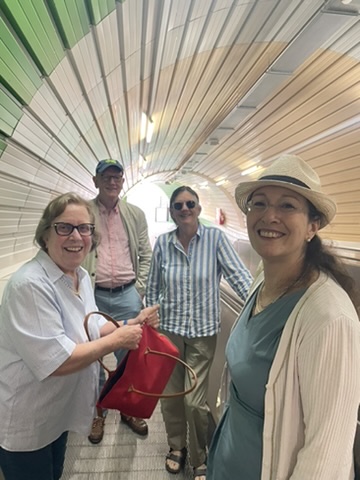
It was powerfully hot that day, and we parked in a parking structure then took a huge interior walking belt that went all the way up the inside of the hill. Without climbing a single stair. Wasn’t that thoughtful of our hosts?


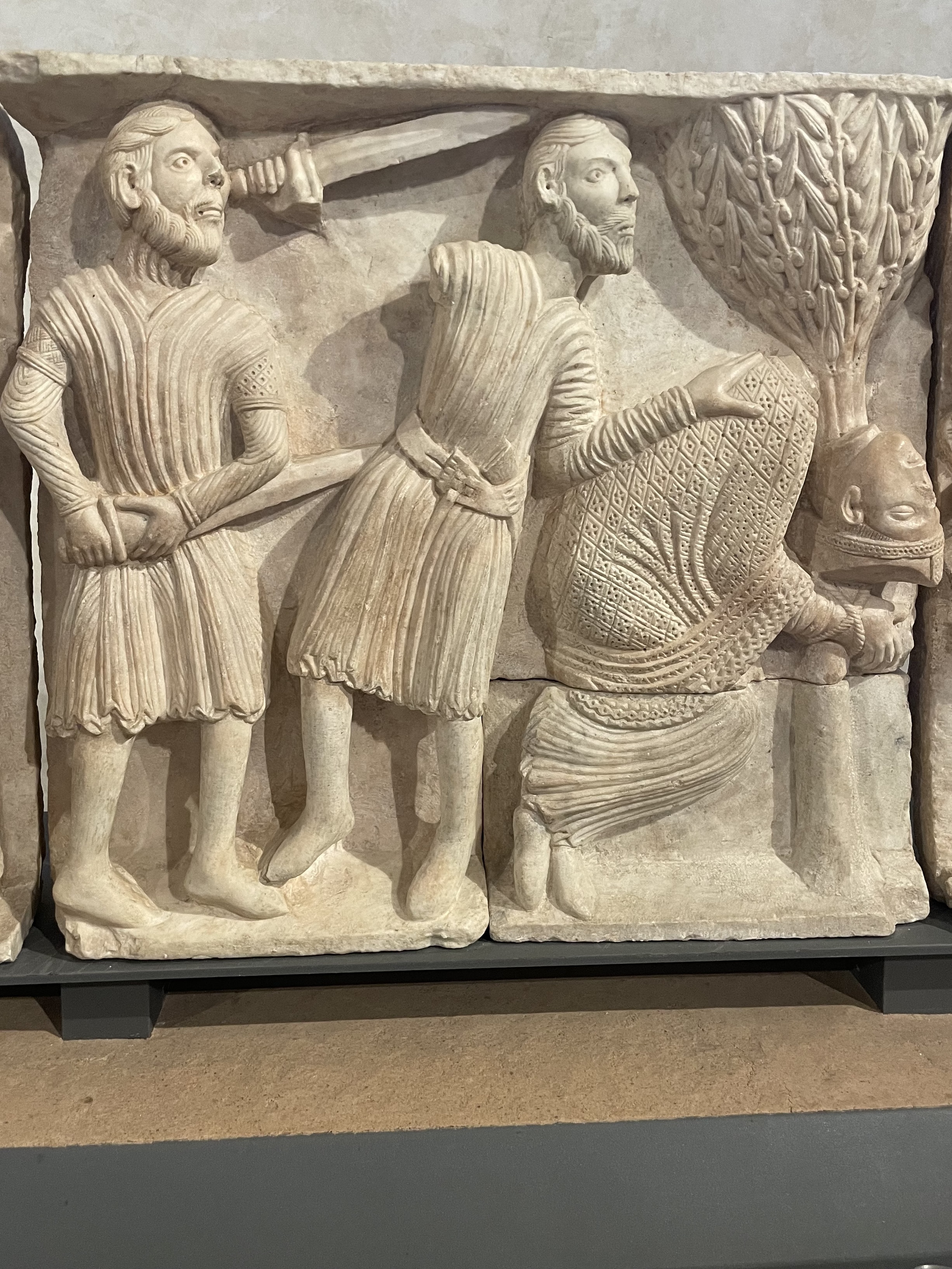
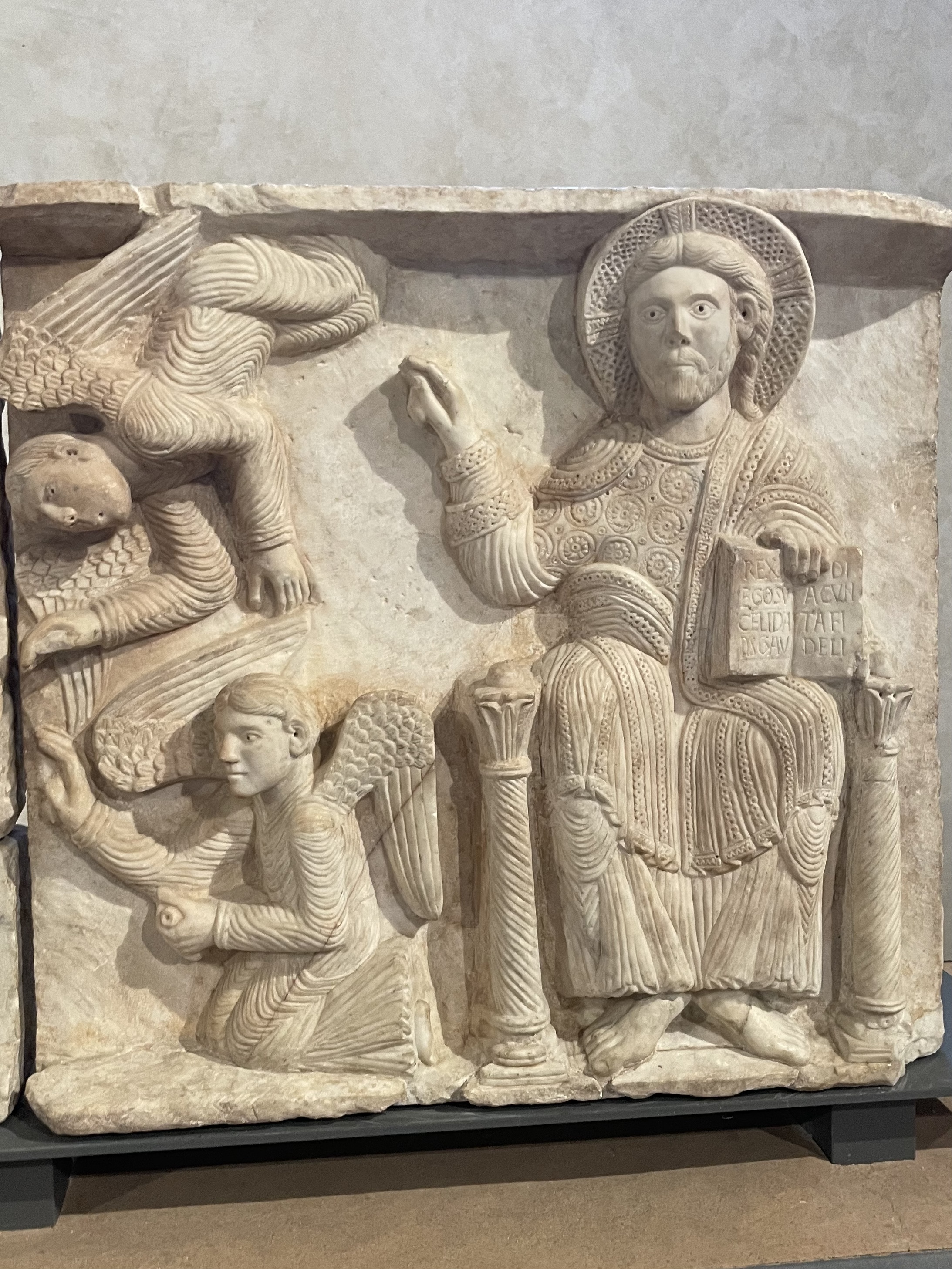
When we arrived, we made our way all the way to the top of the hill to see the Torre Rocca Albornoziana, begun in 1359, and finished (are these structures ever finished?) in 1370, which towers over the city and houses museums of various Etruscan and medieval artifacts such as these carvings which were “recycled” from columns and tell the story of the torture of Erasmus. The walls or the Rocca are studded with coats of arms and Valentina told us about the efforts of the pope by commissioning this structure to reestablish the papacy from Avignon to this part of Italy. Other famous visitors were Lucretia Borgia, for three months in 1499 and there were letters written in latin in her hand. Here are more accurate historical facts about the Torre Rocca.



Outside the Towers sits the remains of the 13th century aqueduct currently closed to pedestrians.
The first thing we saw when we entered the walled towers were the frescoes which remained from the 14th and 15th centuries. Many of the frescoes have been lost in the period from 1816 to 1982 when the towers functioned as a prison. Every spot we saw while I was there bore the pentimenti of previous centuries, and the historical revisions of those who followed.
However, in the case of the entry courtyard, it was hard to not note the work of Mario Merz in the center of the courtyard. His work I had admired at the Beacon in February in NY, and as incongruous as it was scattered throughout the 14th century structure, it was a lovely reminder of other trips taken.


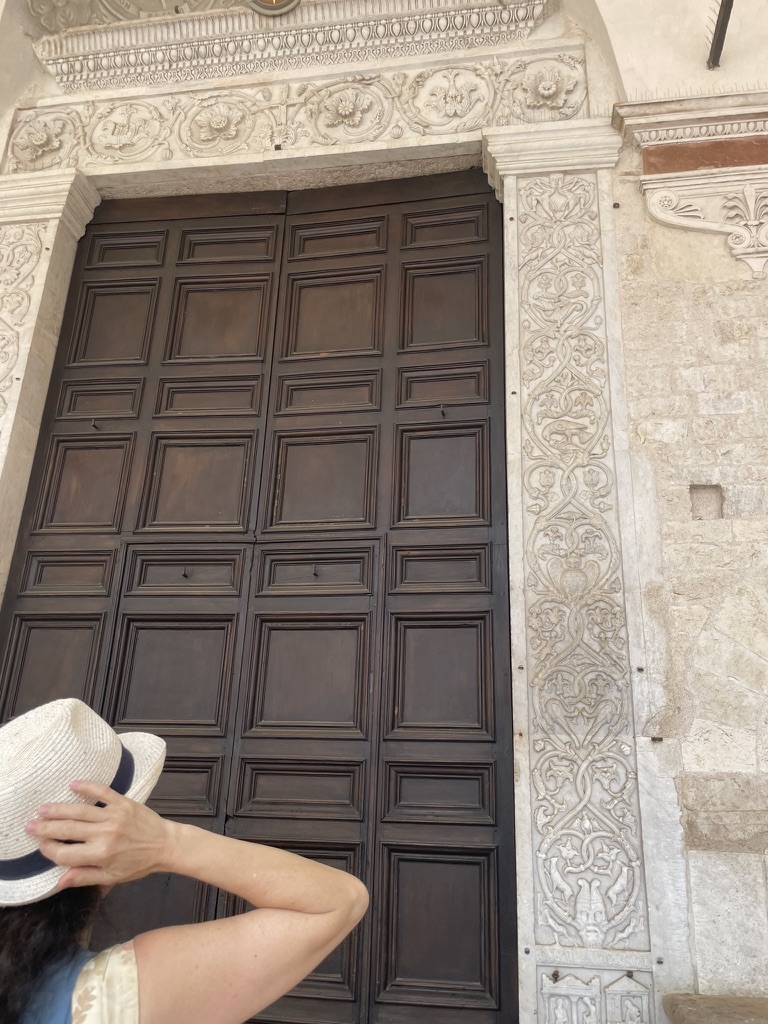


After visiting the Cathedral which is adorned with frescoes by Italian painters Fillipo Lippi (those depicting the virgin, painted between 1467 and 1469) and another chapel featuring the work of Pintoricchio and Jacopo Siculo, we were pretty knackered and so we went into the main square of Spoleto where we found a lovely cafe overlooking the cathedral and stopped for lunch. While there, Marina got up at one point and returned to the table, having asked a young man at an adjacent table if he was affiliated with the Spoleto Festival and the theatrical offerings. He was and she somehow finagled an invitation for us to see the inside of the main theatre in the square after lunch. The young man, a director from the Accademia Nazionale Teatrali di Roma, Danillo, was lovely and generous with his time to show us around not one, but two theatres in Spoleto. He was there accompanying young artists from the Accademia who were performing their own work in a smaller theatre under the main theatre. We exchanged addresses so we could reciprocate in New York or Los Angeles.
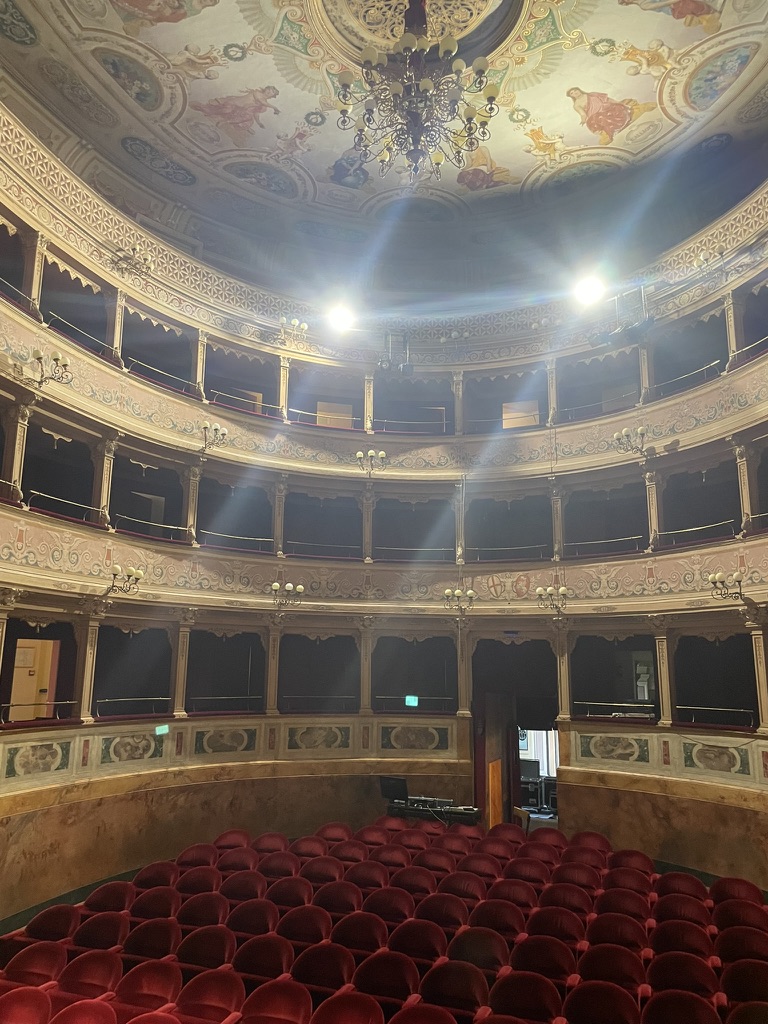

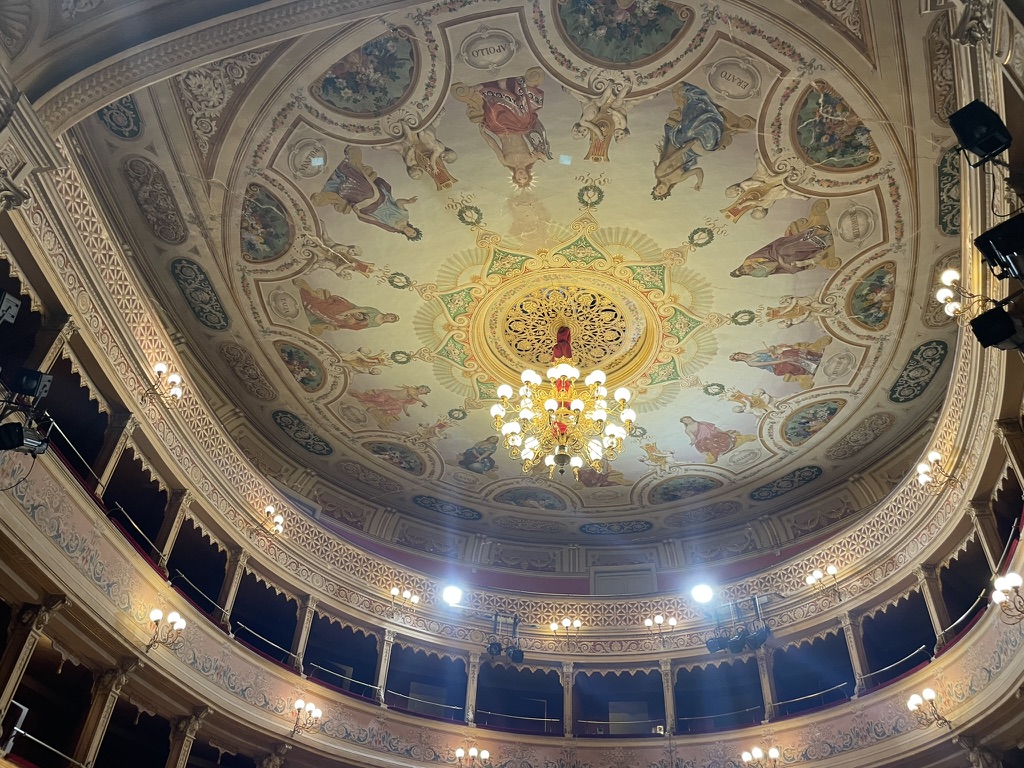
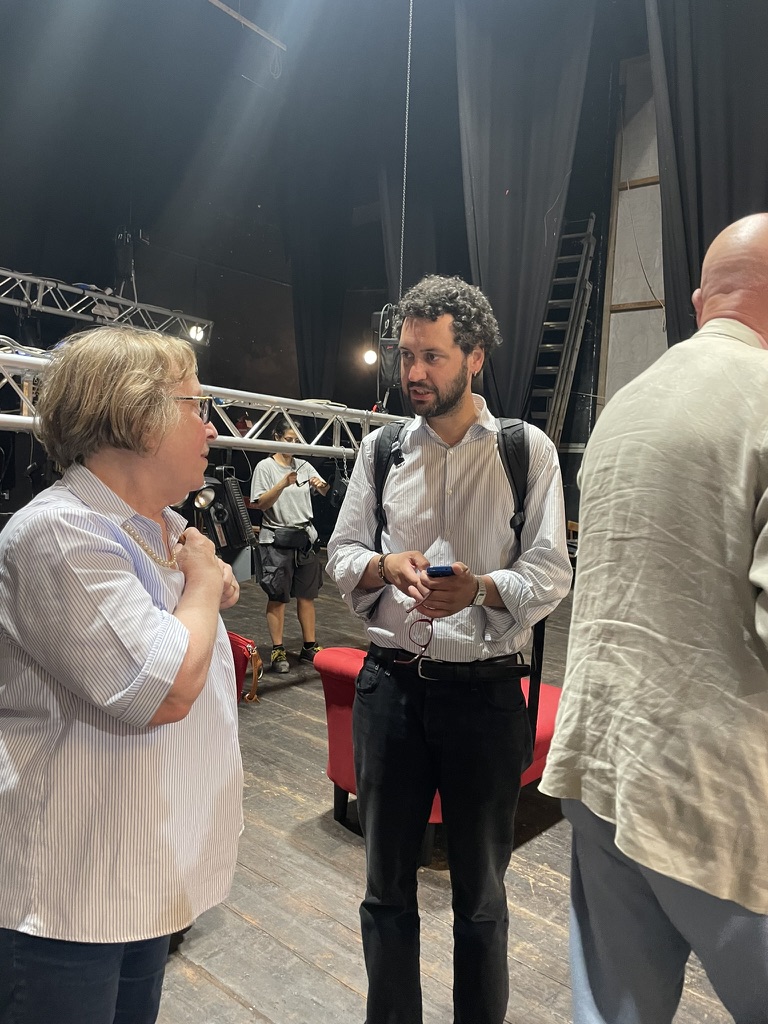
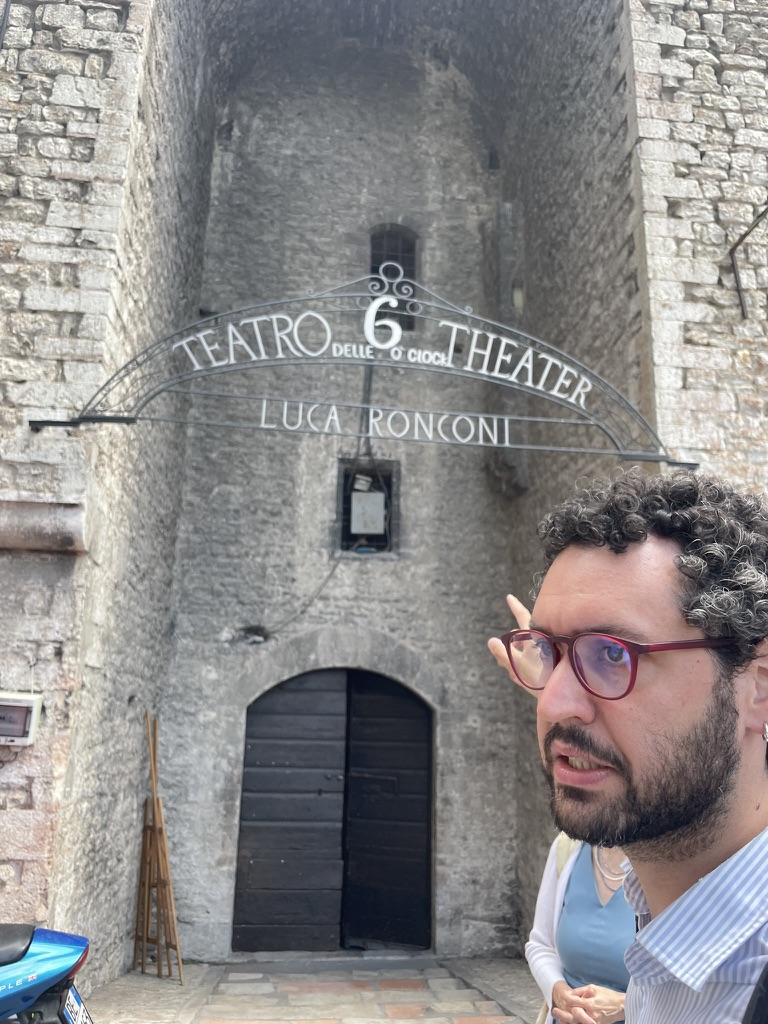

Francesca left us here at the second theatre, as she needed to get home and Bob, Sally, Marina and I made our way back down through the town’s streets to the car, then back to Civitella. It was a lovely, entertaining, educational if somewhat exhausting day.
The next day, my last in Civitella, was exquisitely planned around an early morning shopping trip to the store for their Fourth of July Party which is an annual event and this year fell not on the Fourth, but on June 28th. After packing Maple, and unpacking the groceries, we started off for Bomarzo, to see the gardens of Prince Vicino Orsini, entitled Sacre Bosco or Parco dei Mostri. These are gardens which I had studied while at Princeton in a Gardens course which may have been the deciding factor for my major change from Political Science to Art History.
Built in the mid 16th century, the gardens were iconoclastic from the usual order of Italian 16th century gardens and intentionally confusing. According to the guide:
By the middle of the 16th century Vicino Orsini created, in his estate at Bomarzo, a labyrinth of symbols, where “Ladies and Knights” might look for their wishes to be fulfilled and wonder [sic] till they got lost. He populated the “sacred wood” with monsters and tortoises, obelisks, nymphs and giant statues. After Vicino Orsini’s death, nobody cared any longer for this jewel of mannerist art, that after centuries of oblivion has been saved, restored and made known by the present owner, the Bettini family. Now scholars, artists, students and tourists come from all over the world to admire this unique work of art.

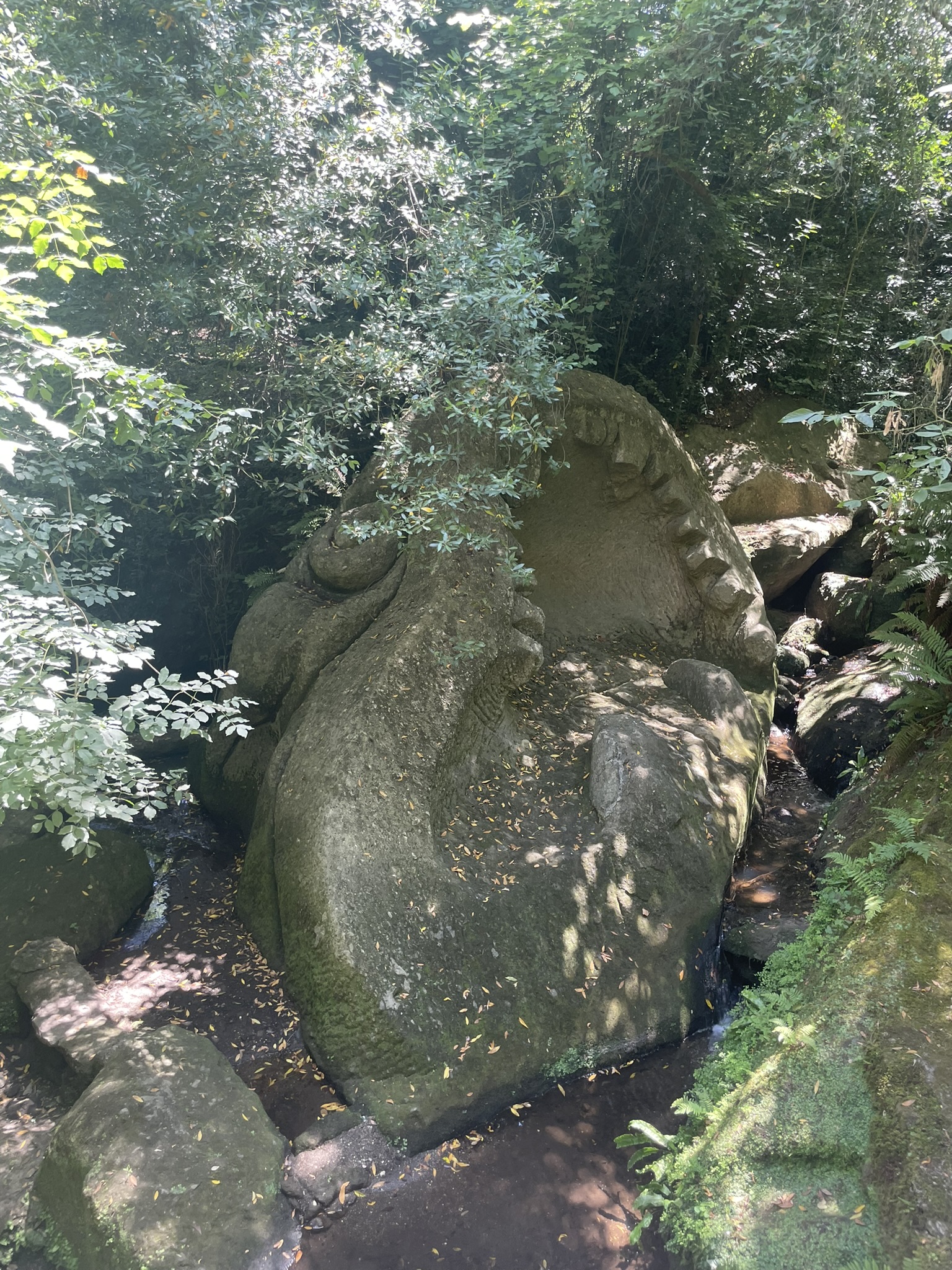


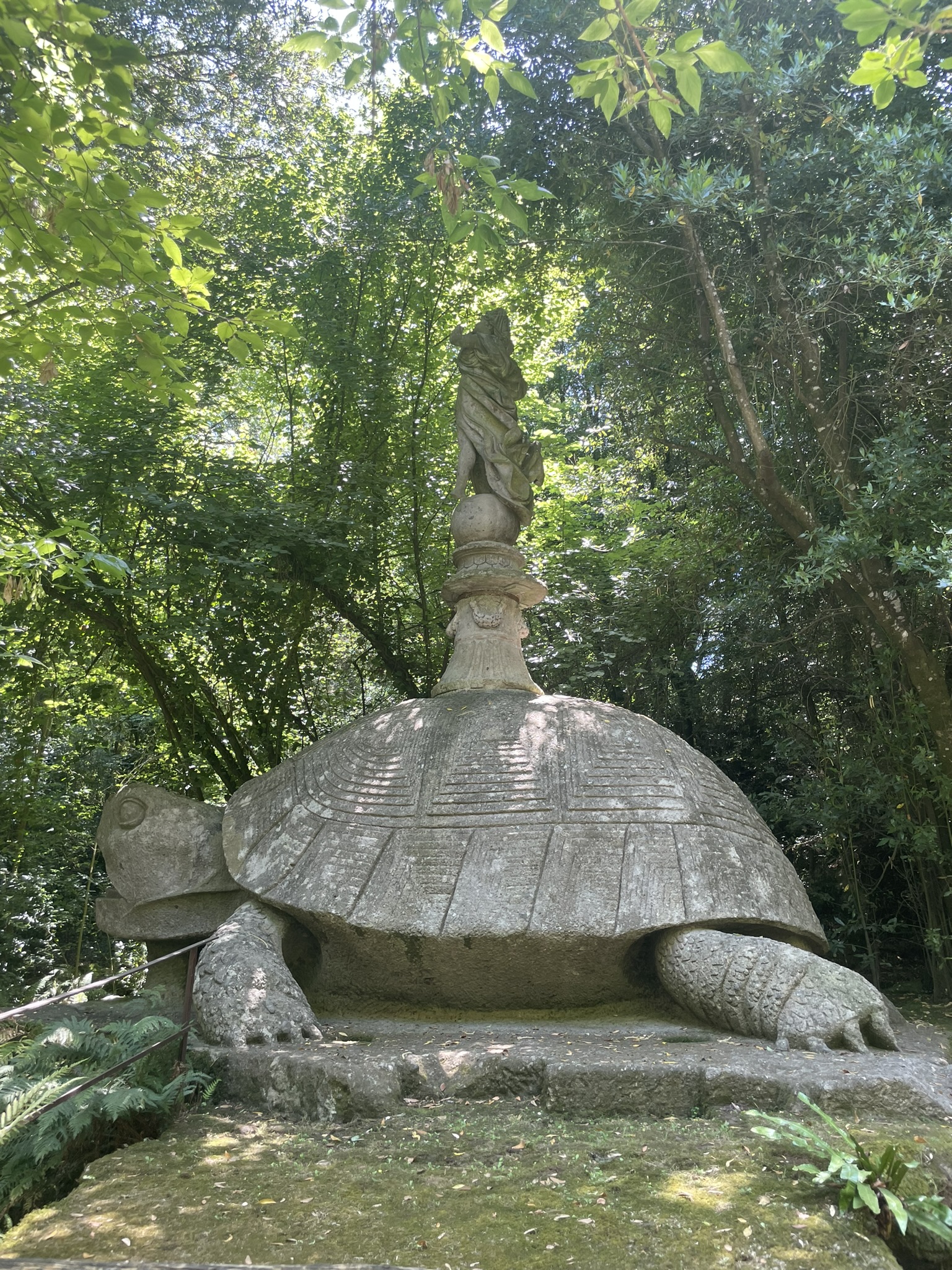

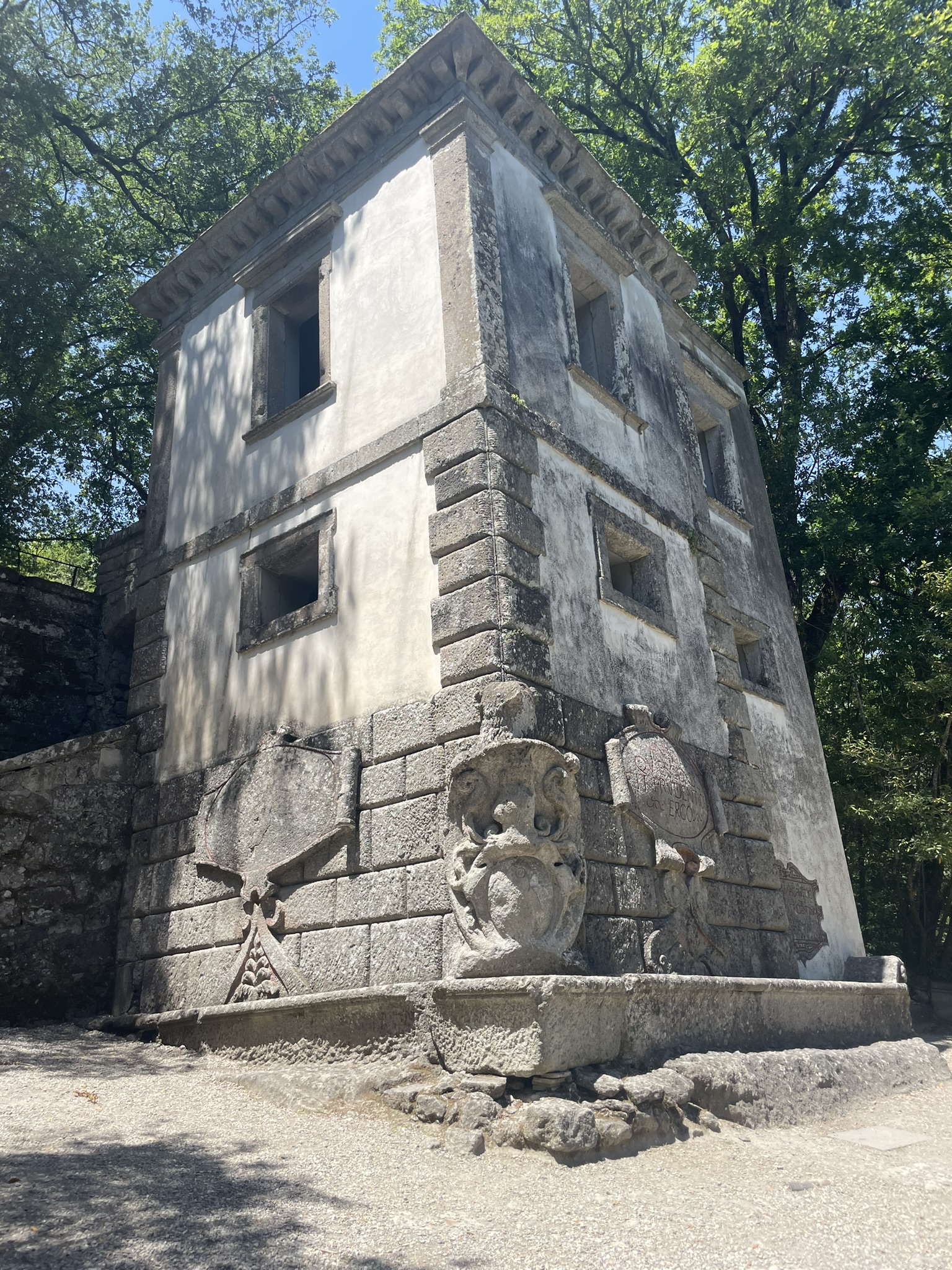

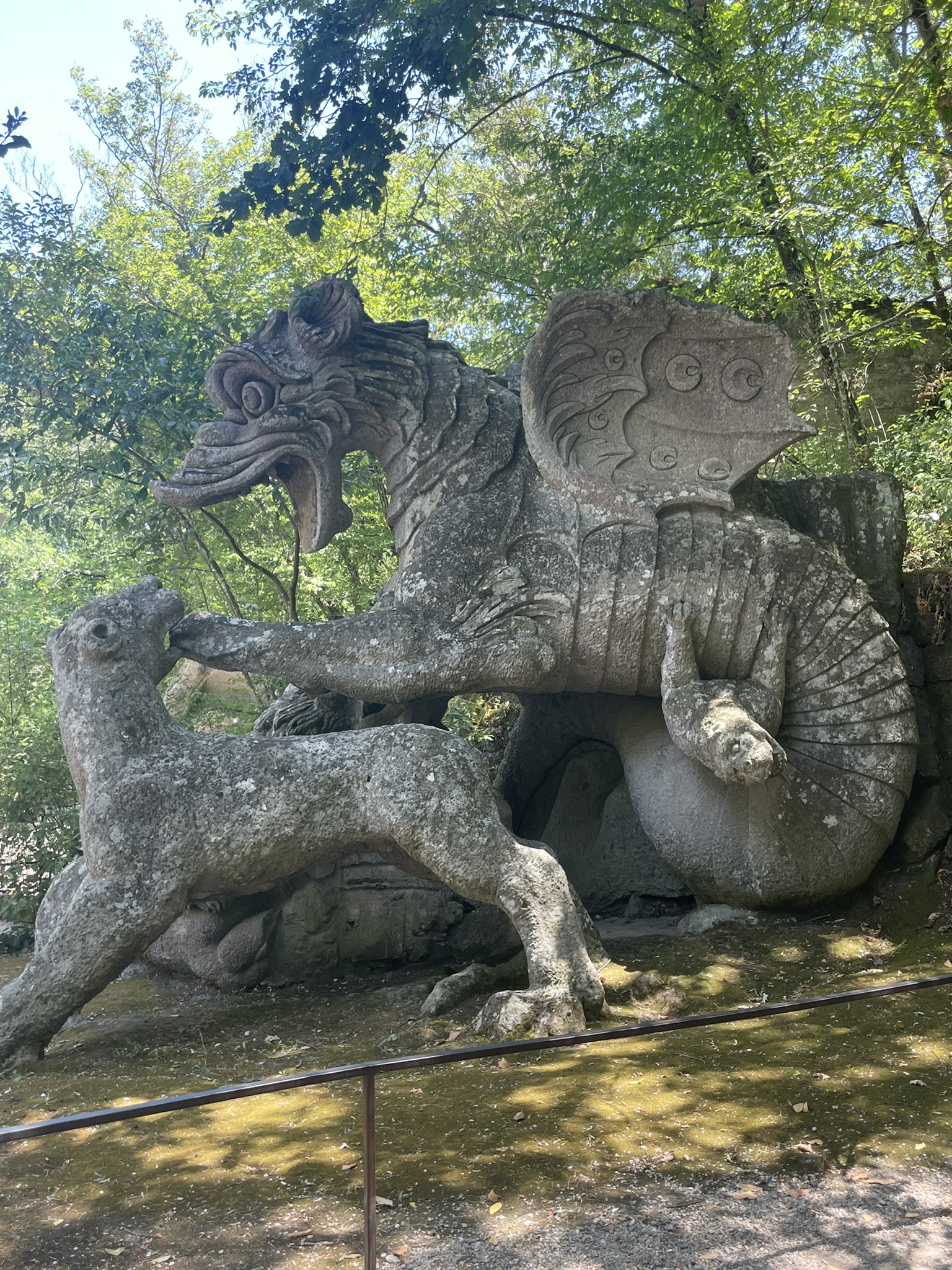


Many of the statues were built around fountains and we remarked how much water it would have taken to fill all the pools. We had a quick lunch in the adjacent air conditioned bookstore/cafe before getting back in the car to head for Orte, where I was to take the train to the airport in Rome. Sally walked me in and reacquainted me with the train process. The train was uneventful and so was my last night at the Hilton Garden Inn. I am writing this from a longer than expected layover in DC where I laid eyes on Maple. She made it to Washington anyway.
 lifeinthethe8tre
6/29/24
Els
Great post; I feel I have been there. Sally and Bob what fab hosts
DAD
Best guest ever!!
Best hosts ever!
So happy to have seen this amazing site with them!