The next Umbrian days we didn’t waste, I can assure you. Here I will talk about two of them.
On Monday, June 22, Bob and Sally and I went to Orvieto, the closest town to Civitella Del Lago, while Marina and Carlo investigated a broken beam in the top ceiling of their roof which had happened two days before but hadn’t been looked at yet. We drove to Orvieto, parking in the underground garage and walking up to the main streets. We visited the main cathedral and appreciated the alabaster windows and statues of the apolstles through the nave. The chapel off the apse has ceiling frescos by Fra Angelico and wall panels by Signorelli. It is a spectacular church.
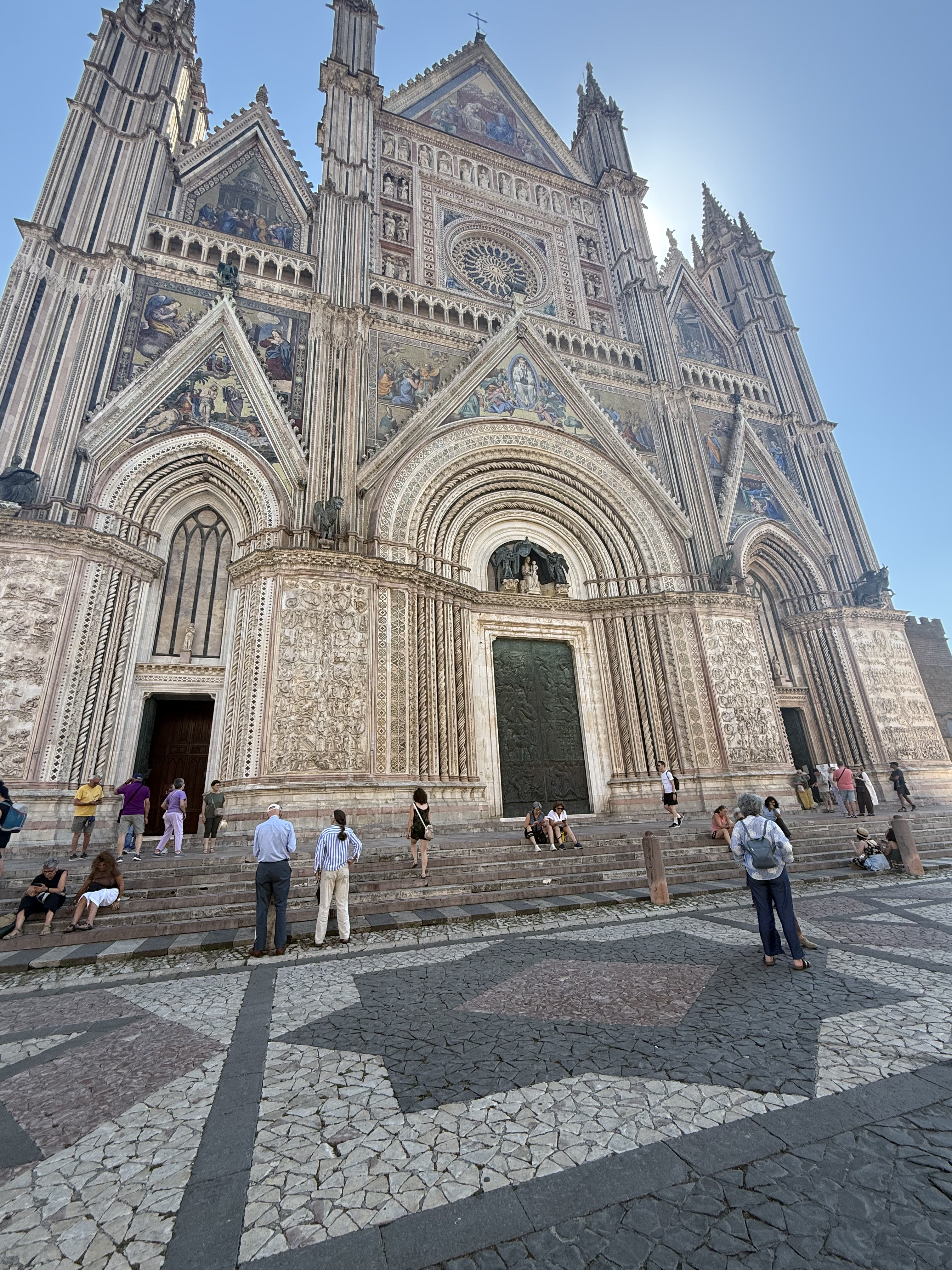
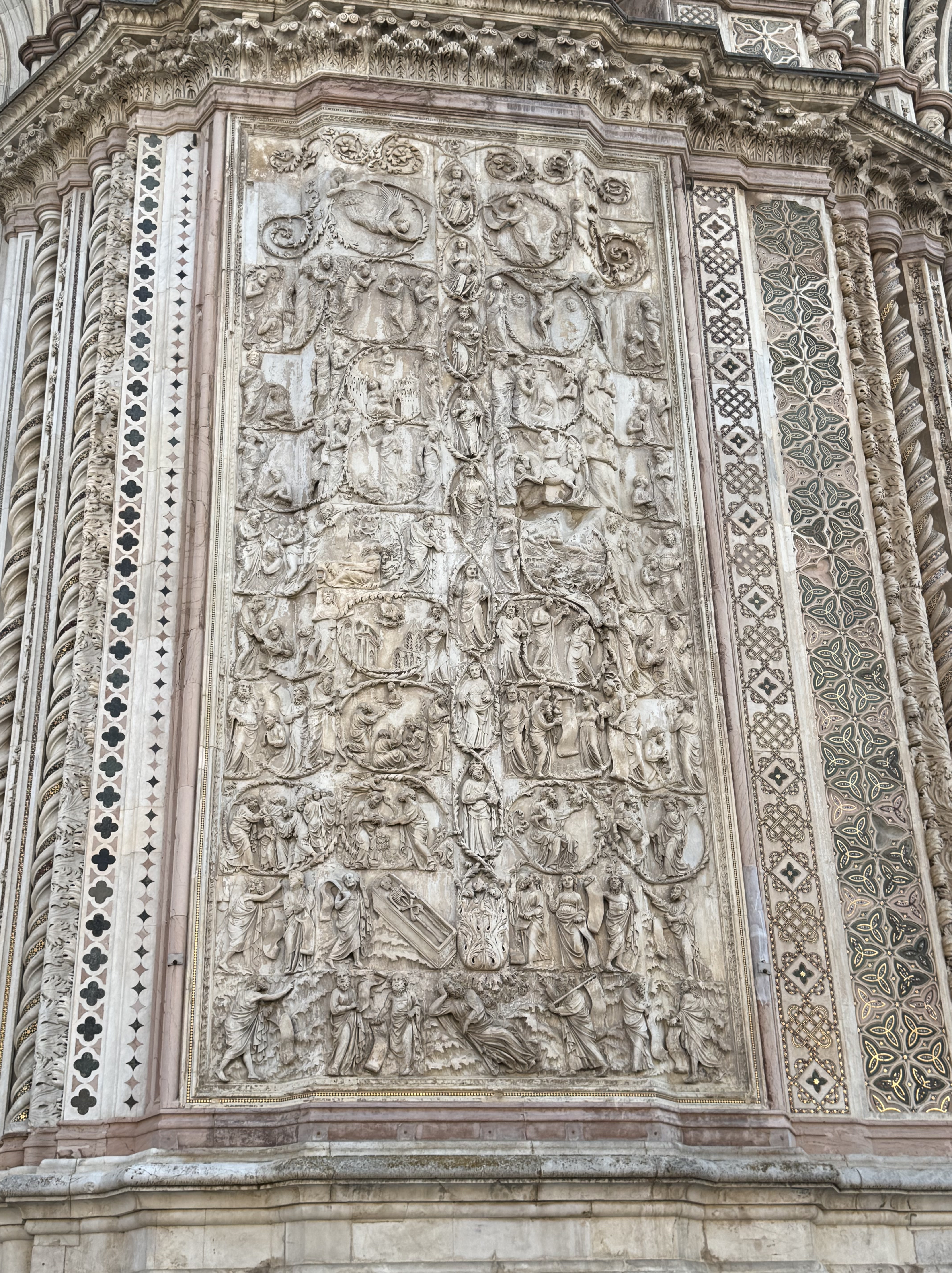

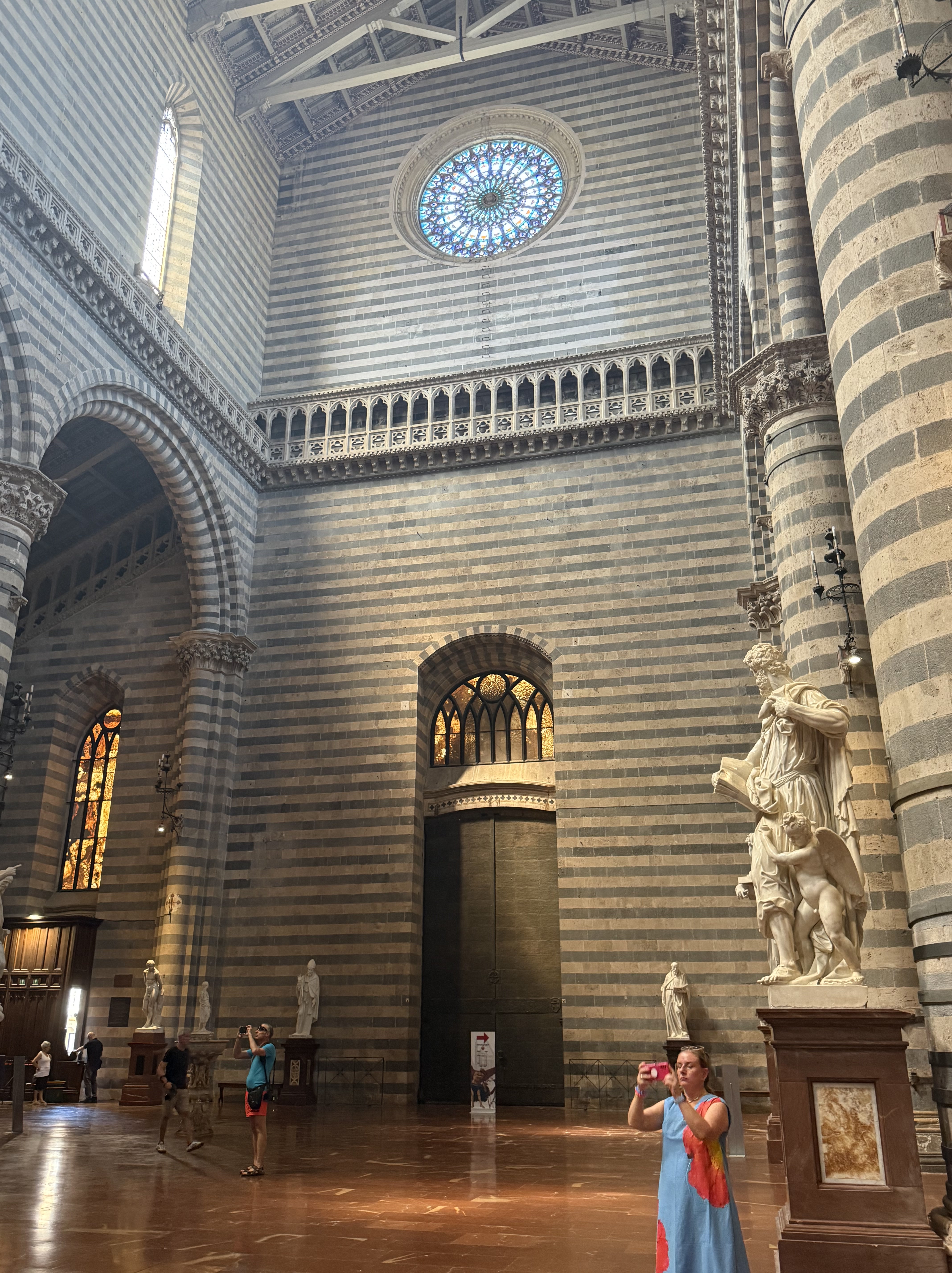
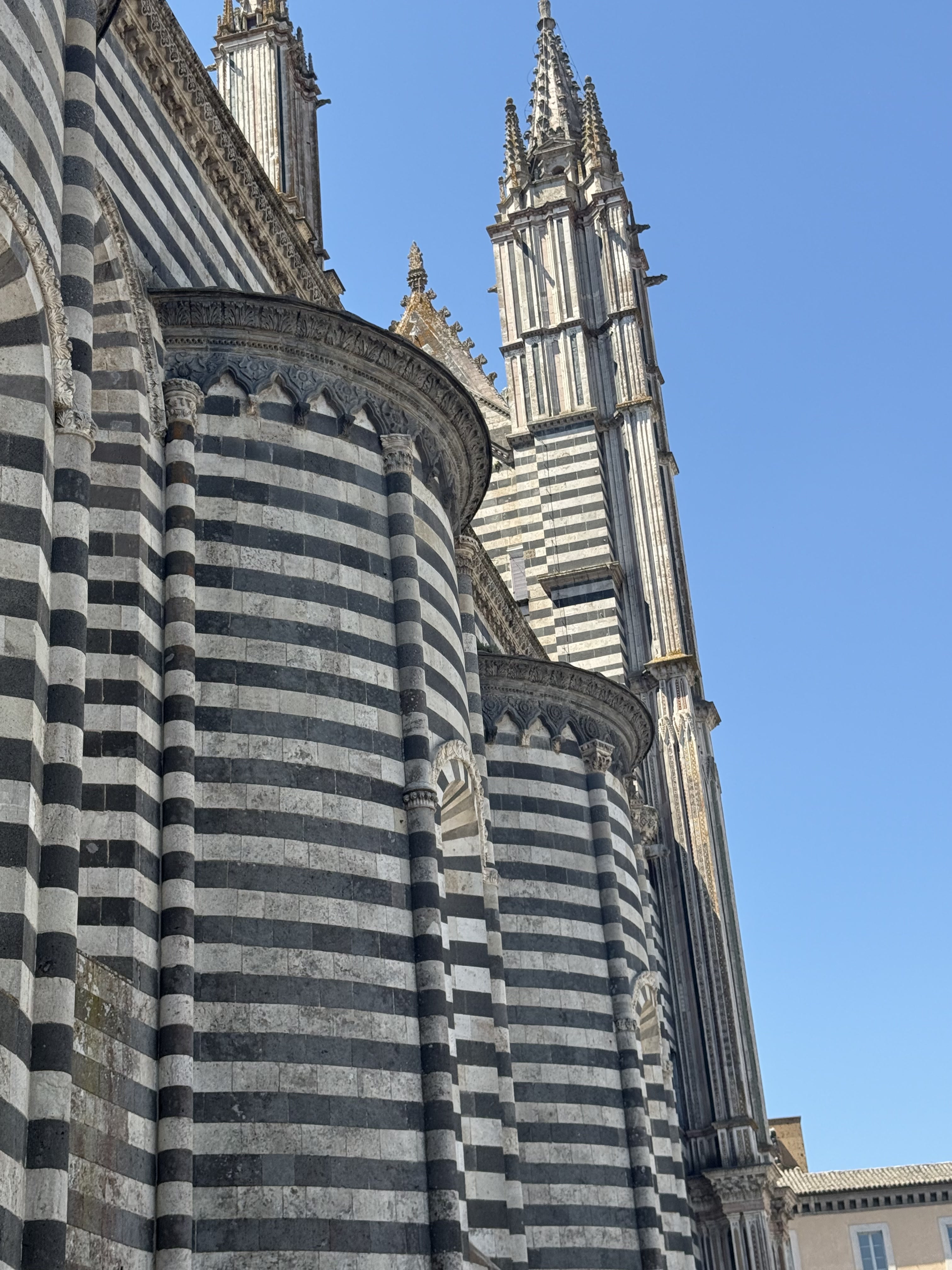
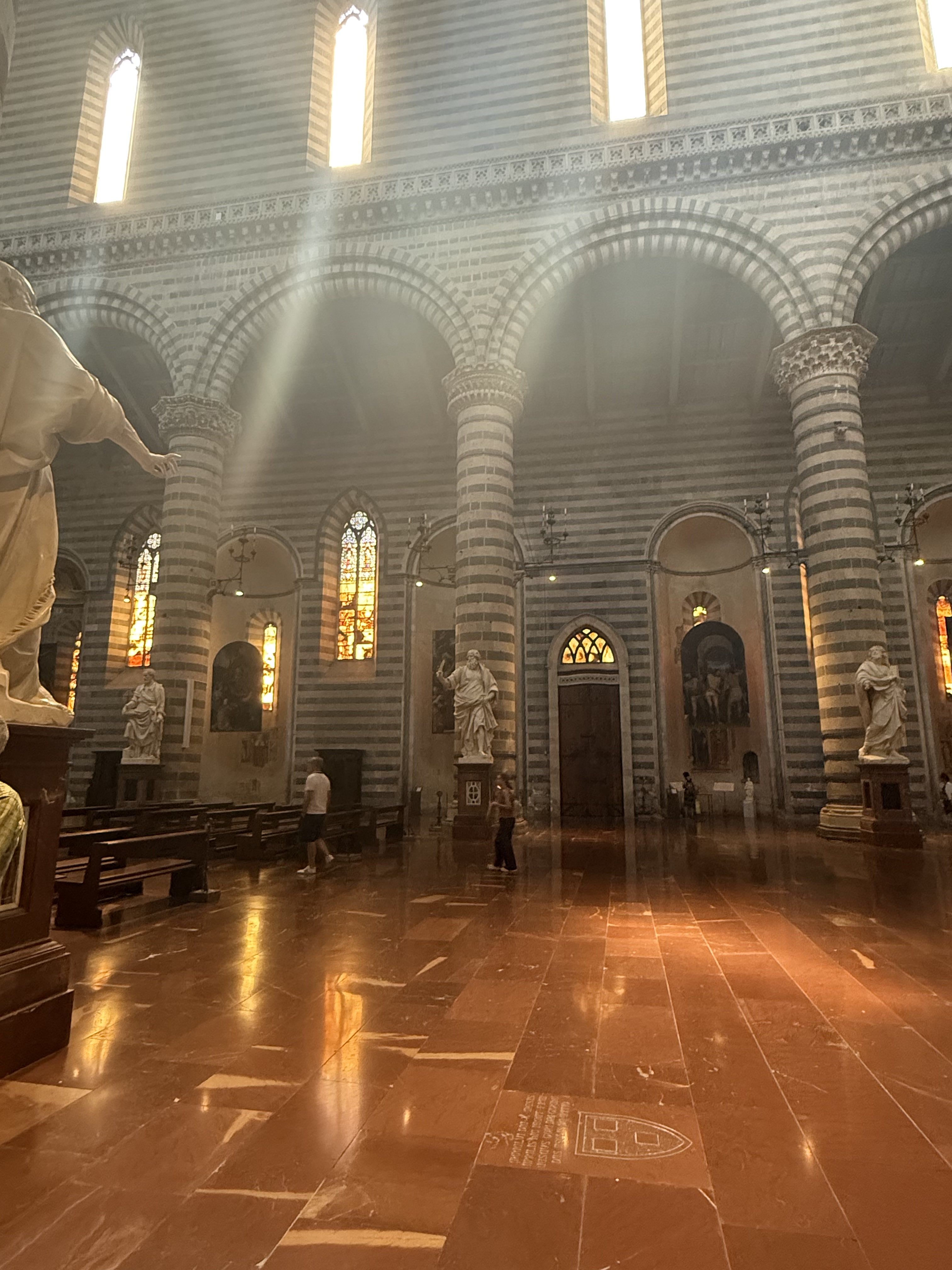
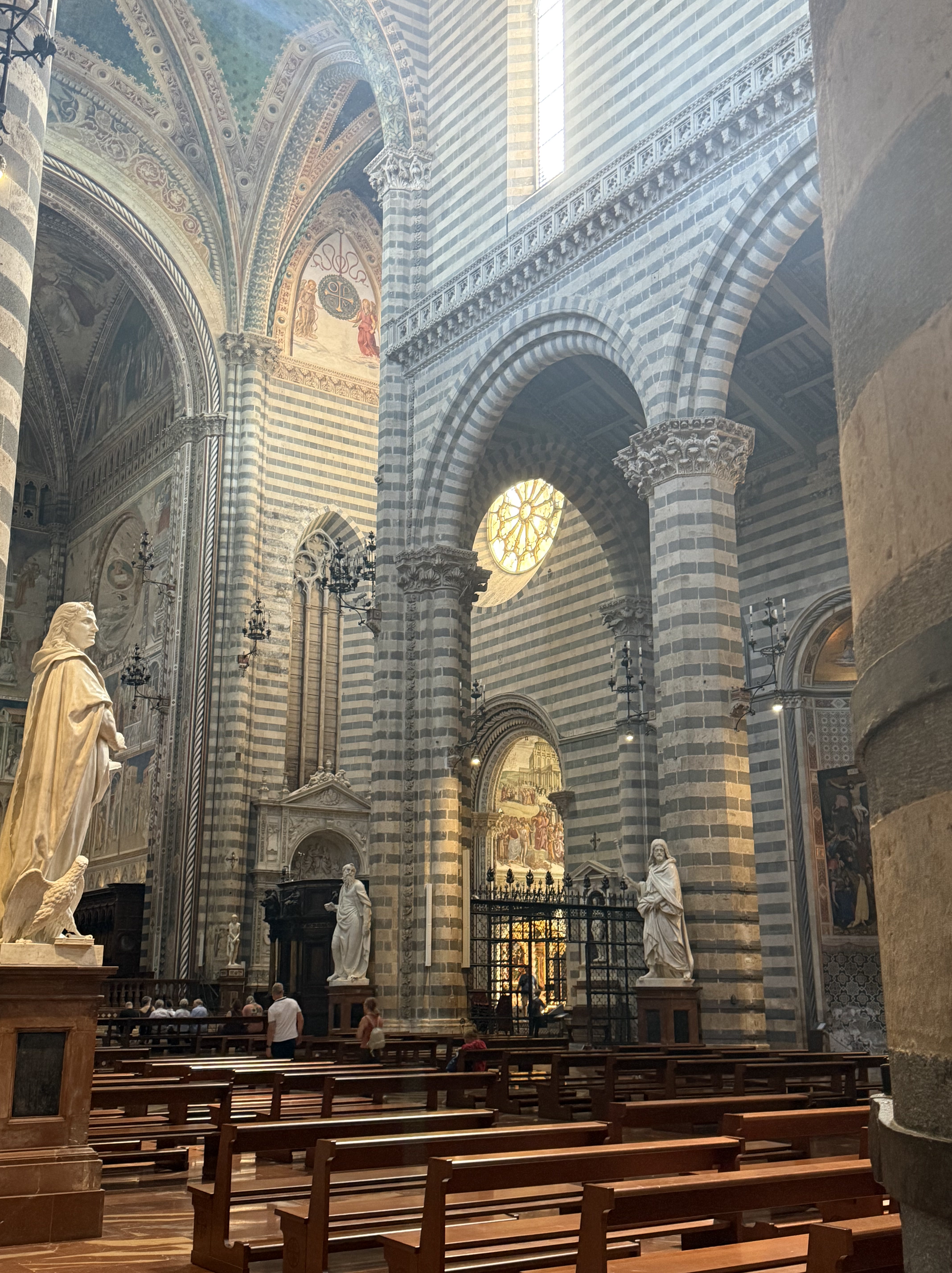
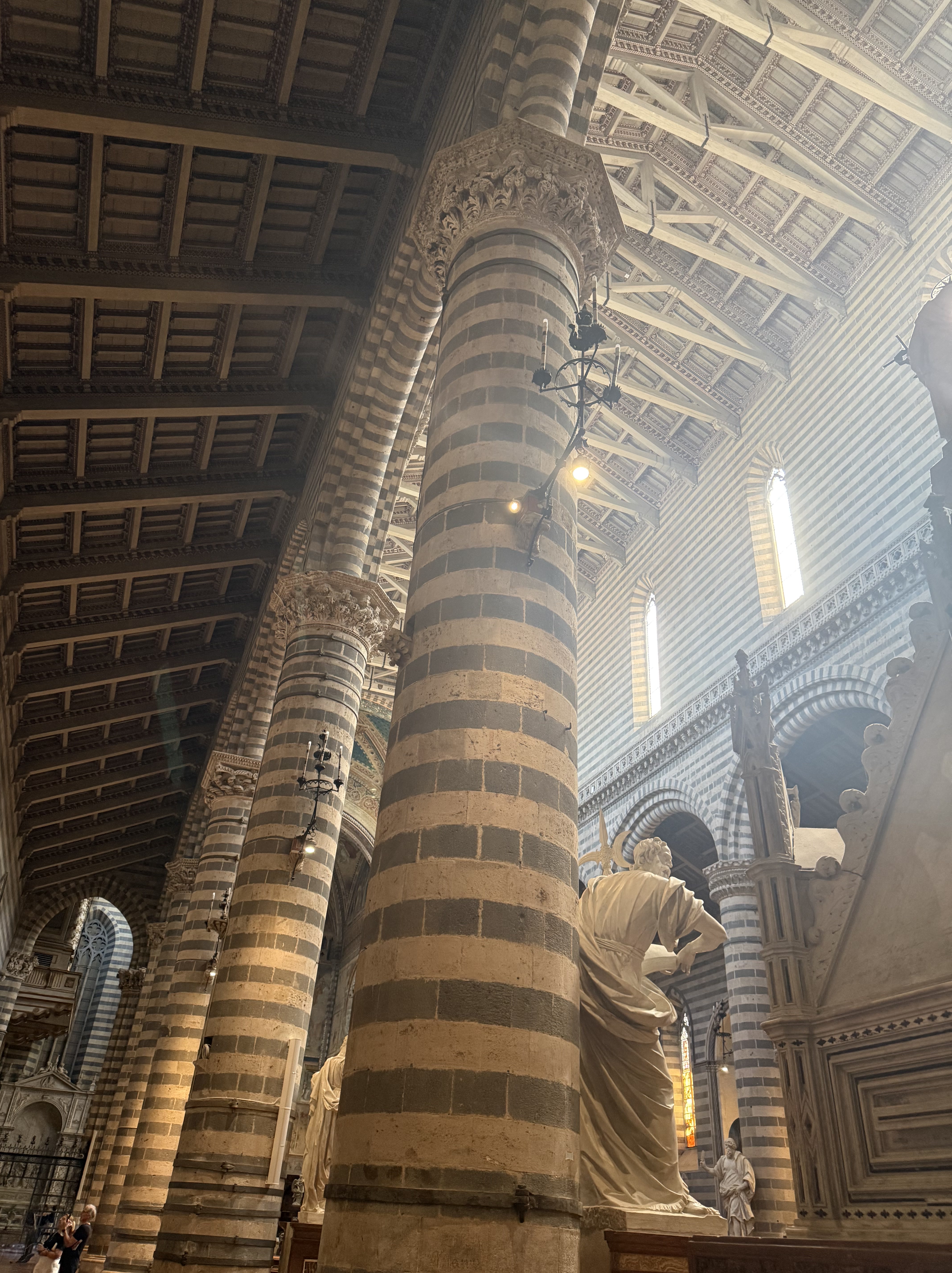
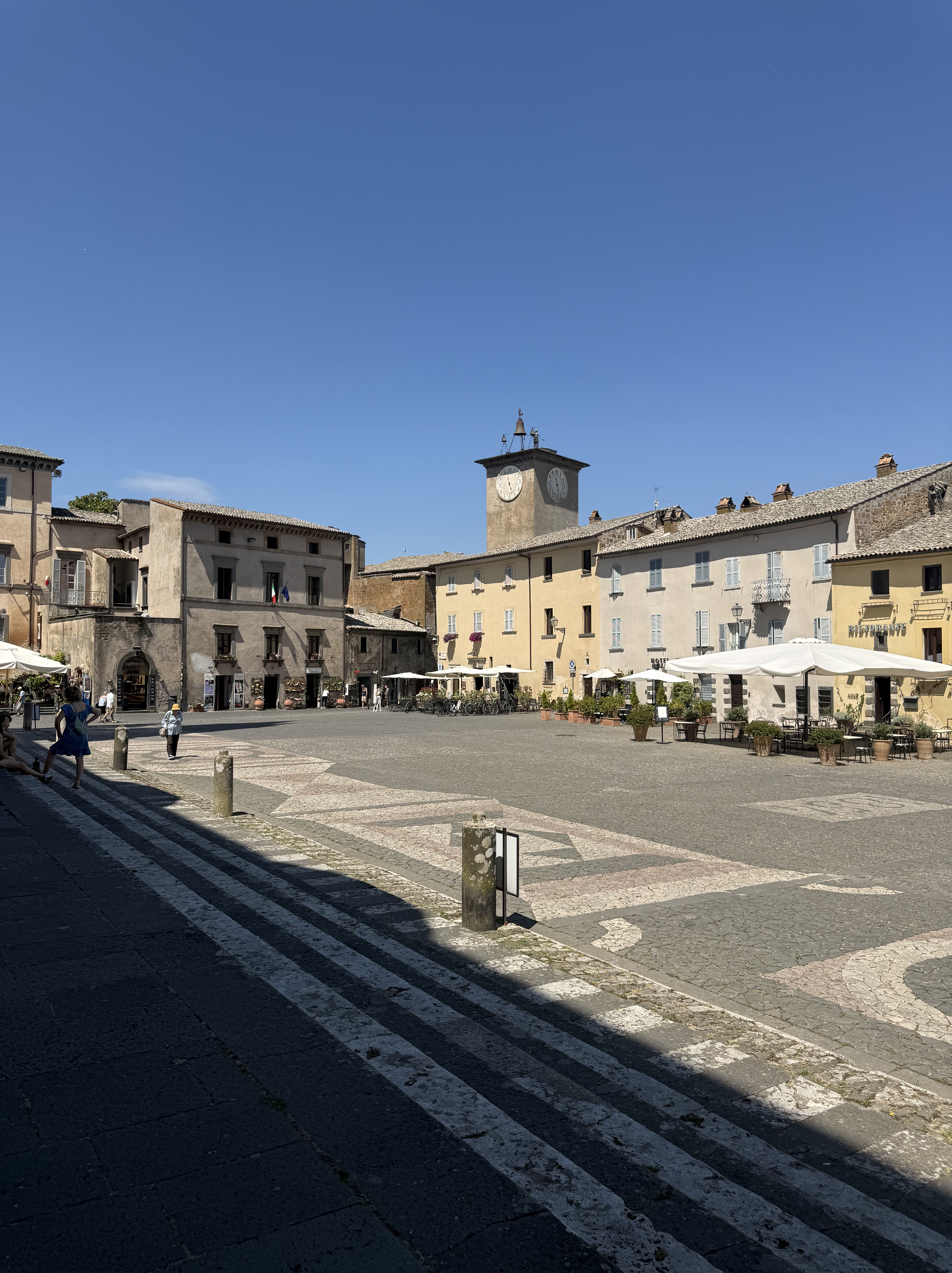

What I love about these excursions especially when you are in over 90 degree temps, is that we are up and out early and back by 2:00PM for lunch and a nap. We get all our exercise in and our cultcha, too. Not without breaking a sweat, but it’s a small price to pay.
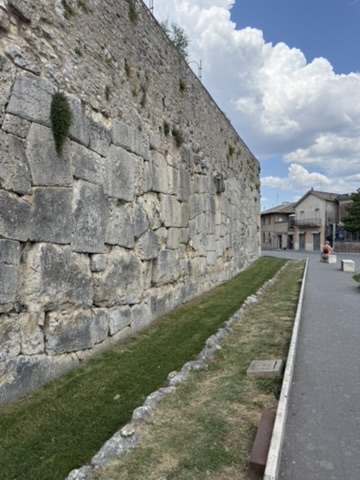
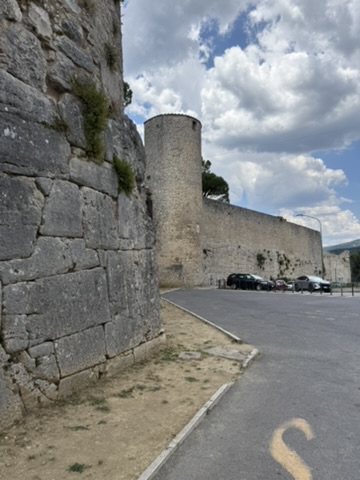
Bright and early on Tuesday, June 23, we jumped in the little Captur rental and drove to the Palazzo to pick up our Ambassador of Fun (AoF), Marina, and then drove a little longer way than the day to the border of Lazio to Amelia, another hilltop town founded in 1135 BC. The walls of the town, which has (according to the Guiness Book of Records, the most facets to the town walls – fifteen, are constructed in two phases. The bottom limestone blocks are huge, in polygonal style, spanning about 6 ft x 4 ft and stacked without any mortar and date from between the 7th and 6th centuries BC. Those walls reach about 10 ft in heigh. The later circuit dates to the 4th-3rd centuries, BC stonework results. I will let you go to Wikipedia to read more about the History of Amelia’s founding. Because I don’t want this to feel like a failed art history lecture.
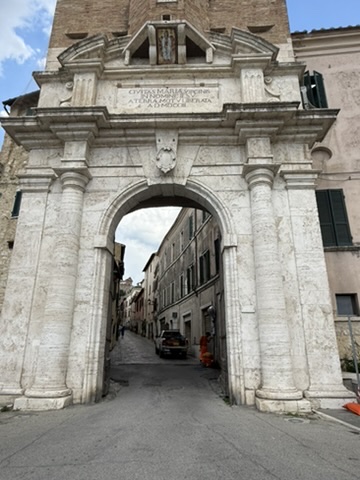
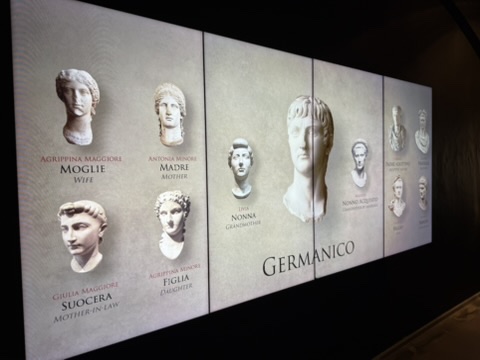
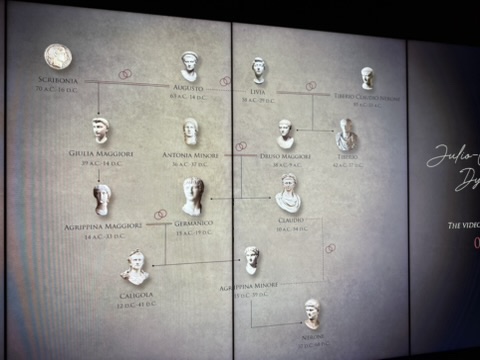
We went in through the Porta Romana, the most central of four gates to the city. Marina had discovered a bus that would take us from the museum right inside the Porta Romana up the hill so that we could visit the Theatro Sociale, which is high in the city and overlooks the largest natural parkland in Italy. More on that later. But first, we had to see the statue of Germanicus Julius Caesar, who was a hero of the town for conquering terrain in Northern Europe to boost the Roman Empire. He was feted with a triumphal chariot return to Amelia and then died in Antioch in 19AD. If you want more detail than this, i urge you go venture to Amelia. At any rate, after the museum visit and a rather hair-raising bus ride up the hill, with barely a centimeter of air between the mirrors of the bus and the ancient walls, we arrived at the top, where we dismounted the bus and went down the street to the Teatro Sociale, where our AoF Marina had arranged a tour of this charming eighteenth century theater.
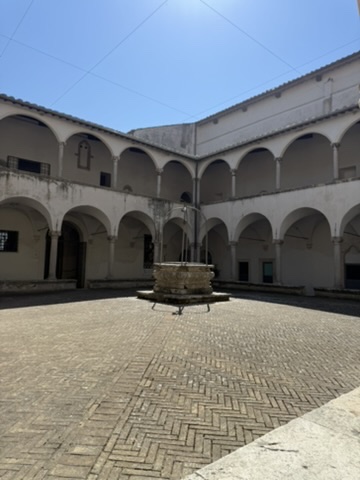
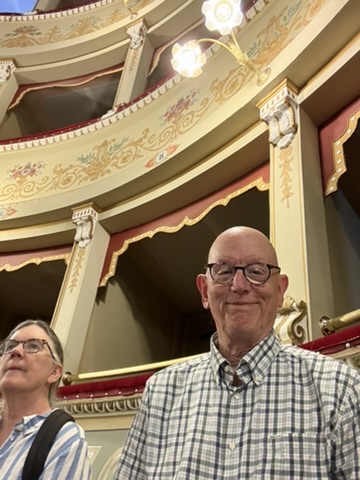
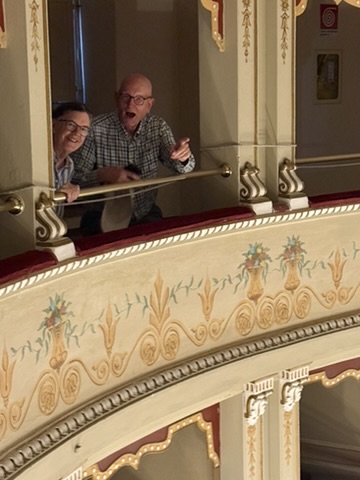
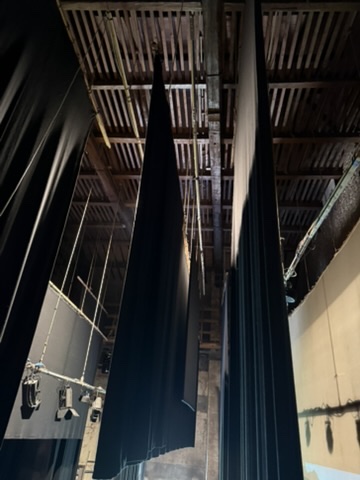
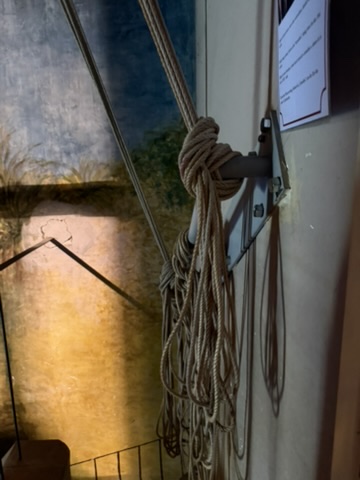
Built in 1782, and opened in 1783, this theater was described as “Condominiale” meaning that while it was still built by the wealthy famlies of Amelia under the leadership of Orso Orsini, it was intended to be used by all strata of the society. We walked into the wooden lobby and were met by a charming woman named Denise, who casually closed the front doors and proceeded to show us around the building. Entirely constructed in wood, including the trompe l’oeil curtains that wreath the seventeen boxes on three tiers. The top logione has benches pulled up to the railing, where people need to climb four flights of stairs to get there. The theatre seats about 400, and was built by two architects, a Roman by the name of Giuseppe Mattei, and an Amelian named Stephano Cansacchi. It is also suggested that another young student from L’Accademia, Giannantonia Selva was involved; in a few years he then went on to build the Fenice in Venice in 1790. According to our charming guide translated by our AoF, Marina, when the Fenice had the first fire in 1836, people were sent to Amelia to look at the plans of the Teatro Sociale to assist in the reconstruction of the Fenice. All the original machinery in the theatre works still, including the beautiful fly system and wagons to track on and off scenery. There was a rehearsal of young dancers while we were tromping though the space. They were about fifteen, dancing to hip hop music and so sincerely dedicated. Later, when I asked Denise when they were performing, she said “tonight.” No wonder it was an imposition for us to be tromping through their space!
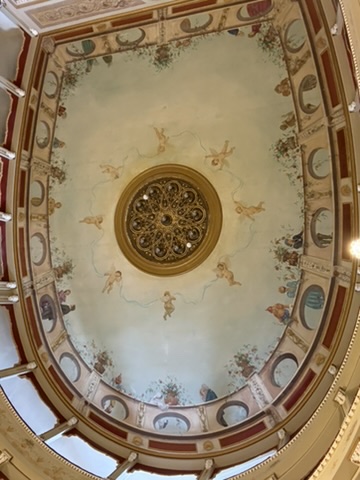
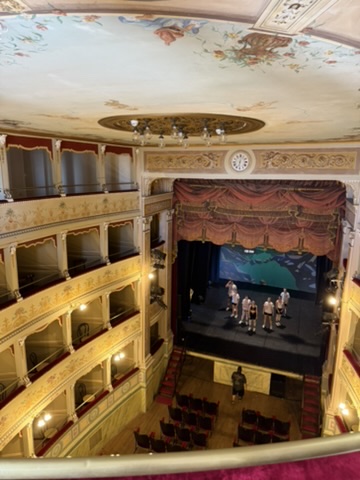
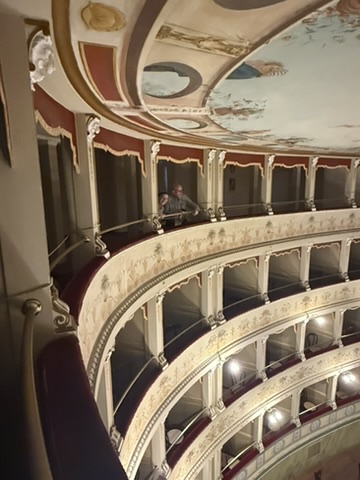

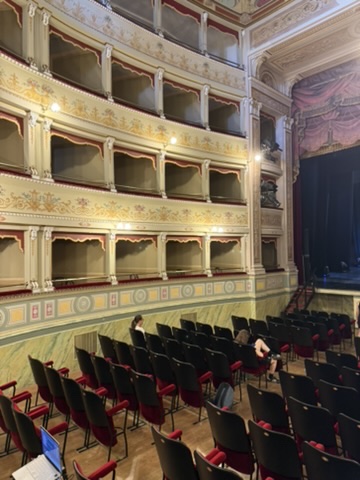
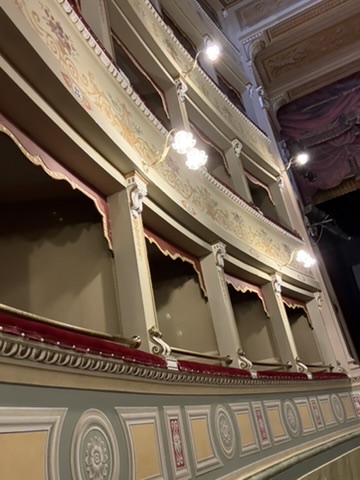
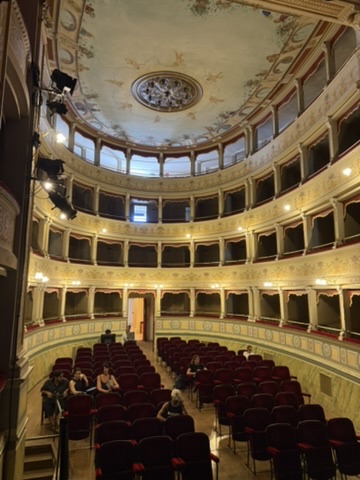
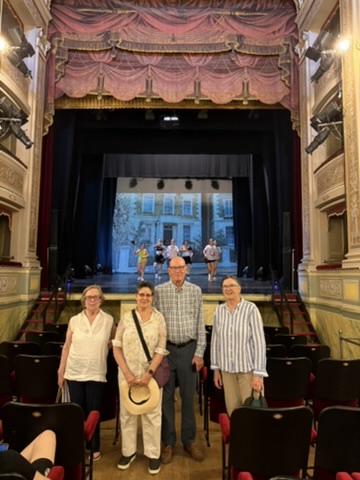
In 1823, when they began doing operas in the theatre, they built an orchestra pit, which Denise pointed to the wooden floor in the house in front of the stage. It can still be used for musicians and throughout the 19th century the theatre featured many lyric operas.
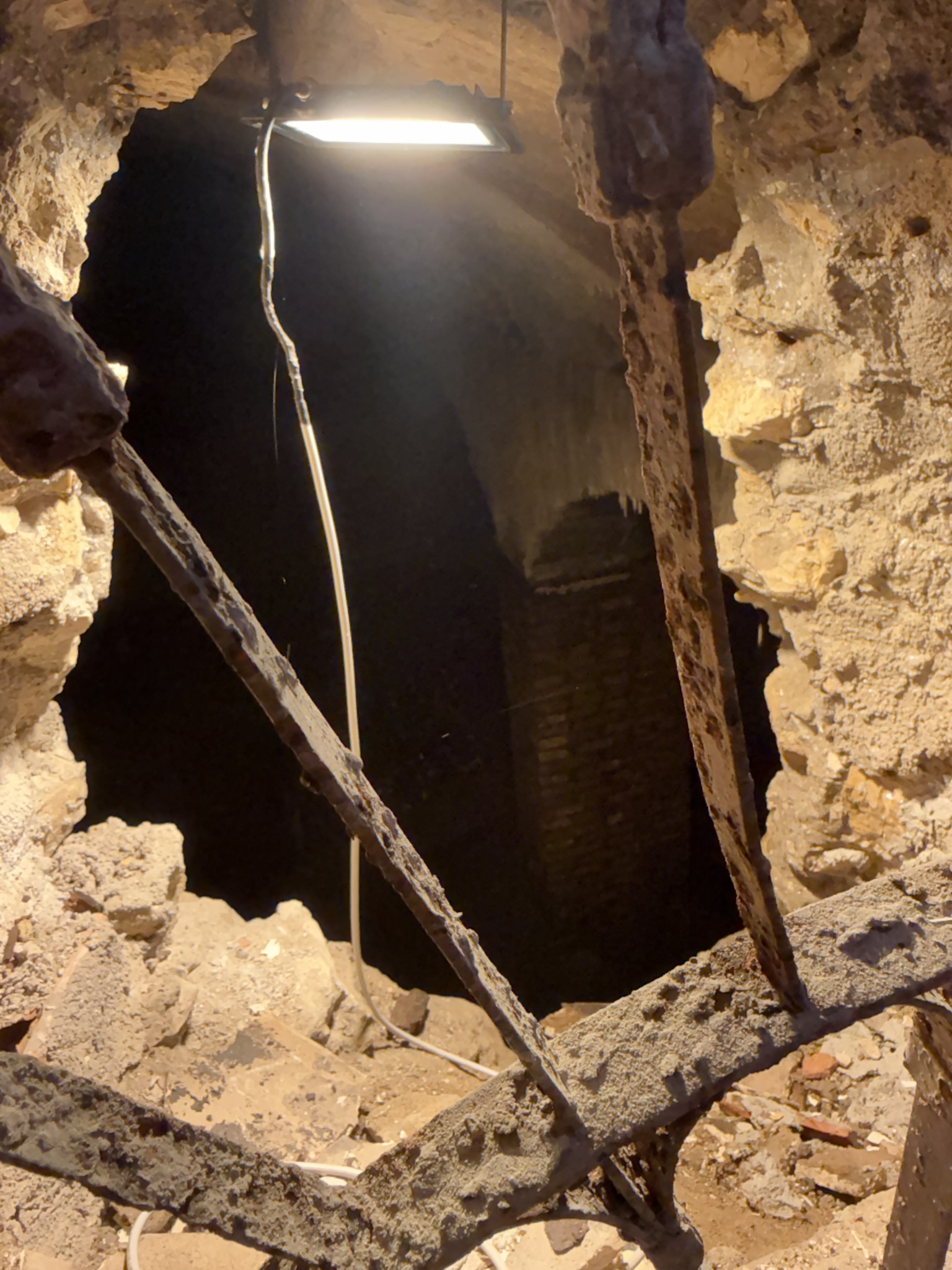
Later in the tour, Denise showed us the view from the voluptuous terraces that have been added onto the back of the theater. This was a view of the largest parkland in Italy, filled with Holm Oaks. I wish I had captured a picture of the front curtain which Denise showed us, an elaborate drape painted by Domenico Bruschi, who between 1880 and 1886 painted the theatre with gorgeous frescoes. The theatre has also been featured nearly 50 times in various films, which you can see a list of on the history page link provided above. One last thing she showed us as we were wrapping up our tour. You won’t be able to see this well, but the theatre has a cistern under it, which Denise claimed was used to improve the accoustic resonance of the house. It was visible through a hole off to the side under where the box office is, and it was dark and very wet, but we could hear dripping water. Looking forward to seeing what my sound design historian friends know about this practice.
More to come! Todi and Deruda and Perugia coming up!
 lifeinthethe8tre
Thanks, ElsDadSent from my iPhoneOn Jun 27, 2026,