I twisted in my seat in the commodious living room of the senior community and faced the gray woman with stringy shoulder-length hair and startlingly blue eyes as she said, “What?” She had moments before said in a loud voice, “I hate that man” as my 95-year old father stood in front of the group of about fifteen over-90s playing charades. It wasn’t the first time she had interjected hateful critiques of players of the game. A little bit earlier one of the denizens had stood in front of the group and struggled to hear the responses from the audience. The player, a former actress sports a sweater which she doesn’t so much wear as drapes it over her upper body and it perpetually threatens to fall to the floor. That had elicited a “Take off your sweater, why don’t you?” and “She’s so stupid” when in fact, she is quite a lovely woman with extreme hearing loss and probably the fringes of her brain losing their elasticity. What makes the Gray Lady (most definitely not referencing the New York Times here) so quick with criticisms? I understand that she is an accomplished photographer who as a young woman was a band groupie and dated one of the Monkeys. But time is terrible mistress, robbing us of our etiquette and good sense, as well as our hearing and other senses. Or, dare I say, our current cultural miasma has made unkindness unthinkably acceptable.
Universal hearing loss is the most frustrating thing with playing charades in a retirement community. Those who still have the privilege of their hearing (and I’m really clear what a privilege it is) know exactly what is happening. Those who don’t (perhaps 85% of the population) will repeat things that have already been written on the board. There are only about five of us who, when we stand in front of the group and do the words, understand when somebody says the right word. We pat our noses forcefully to signal to everyone that that word has been achieved. I’ve been playing charades since my dad moved in last September and I love the game; I love these crusty old verbal enthusiasts who play every Tuesday evening. We gather after dinner in the front living room, starting about 10 after seven. J kicks off the festivities, clutching his microphone with a 100-year old twinkle in his eye, and welcomes us to an evening of festivity and frolic and merriment, and then proceeds to tell egregiously, terrible jokes, usually sexual in nature, which causes us all to roll our eyes and laugh before we begin. The host of the evening, King A, quips “why did I give him that job?” and then the games begin. King A spends a considerable amount of time and effort creating names of songs and movies and books slightly altered so we don’t get them instantaneously. This group is well read, and has seen all movies and knows all song/show lyrics. That’s to be expected after nearly a century of living with a wide array of education and cultural experience. The level of sophistication of the group is extraordinary. Maybe that’s why I like spending time with them. They know every line from every movie and song from 40 years ago. At the same time, the group is a bit feral. Their treatment can be cruel. A friendly inhabitant of the community used to manage the whiteboard, writing first the category, then the number of words in the clue, then entering the words into the slots. The deck was stacked against her. First, she had terribly inadequate erasable markers; this caused people to shout at her, “I can’t read the board!” Horrified, I rectified that with a trip to Staples one day, but then she would neglect to fill in the final words of the clue after they were guessed – she went right to erasing them; this resulted in a chaotic chorus of “What was it?” Miss D retired/withdrew from these duties, citing a sore back from the getting up and down, but I think it was really the Lord-of-the-Flies-quality of her peers that made her feel under-appreciated. Especially from the Gray Woman behind me who insists that people stand a particular place, so they don’t block the board, and wants to know how many words before the participant has had a chance to count them on the printed out slip they’ve chosen from a battered brown fedora. This Gray woman has a long history of crankiness. The few conversations I’ve had one-on-one with her, she was quite pleasant or at least stopped scowling over the course of our brief exchanges. But after she said she hated my father and I turned and said “You do know we can hear everything you say right?” she replied, “but he’s stupid.” I said “No, he is not stupid at all” then turned back to face the front of the room. Our host, King A says we should intervene when people behave in an uncivil manner. Several nights the charades has crumbled like the delicious oatmeal cookies that the kitchen prepares every day. One night a conflagration resulted between H and the Gray Woman. He stormed off and, in a few minutes, the group broke up and went back to their rooms. Since then, GW will say things like “I hate that man” when H gets up to do a clue. She is unchallenged.
In this phase of my life where I’m actively seeking the next words, Charades is one of the best practice areas I can be in. That and studying Italian for my upcoming trip. But more vital was finding my voice with the Gray Woman. I wasn’t there at breakfast the last morning Dad had breakfast with her. After being seated with the group already assembled, Dad started to order his breakfast, and she and another woman at the table said, “stop talking.” Dad explained that he needed to put in his breakfast order and refused to be seated at her table again. Her compulsive rudeness and bullying seems to have been accepted by most others in the community as age-related and I do feel sympathy for that loss of filter. It occurs to me that you may deem my critique here as hypocritical. But I think the larger point is that as a society, we’ve lost our civility – I’ve heard people describe it as COVID-19 whiplash at having lost our sense of what’s okay to say. I would agree that that happened in particular with young people, who when returning to college after 18 months of isolation, seemed to have lost their ability and interest to socialize with others, but what’s the over-60’s excuse? Lord knows we’ve lived through long lives prior to COVID-19’s enforced solitary confinement. WE KNOW BETTER!
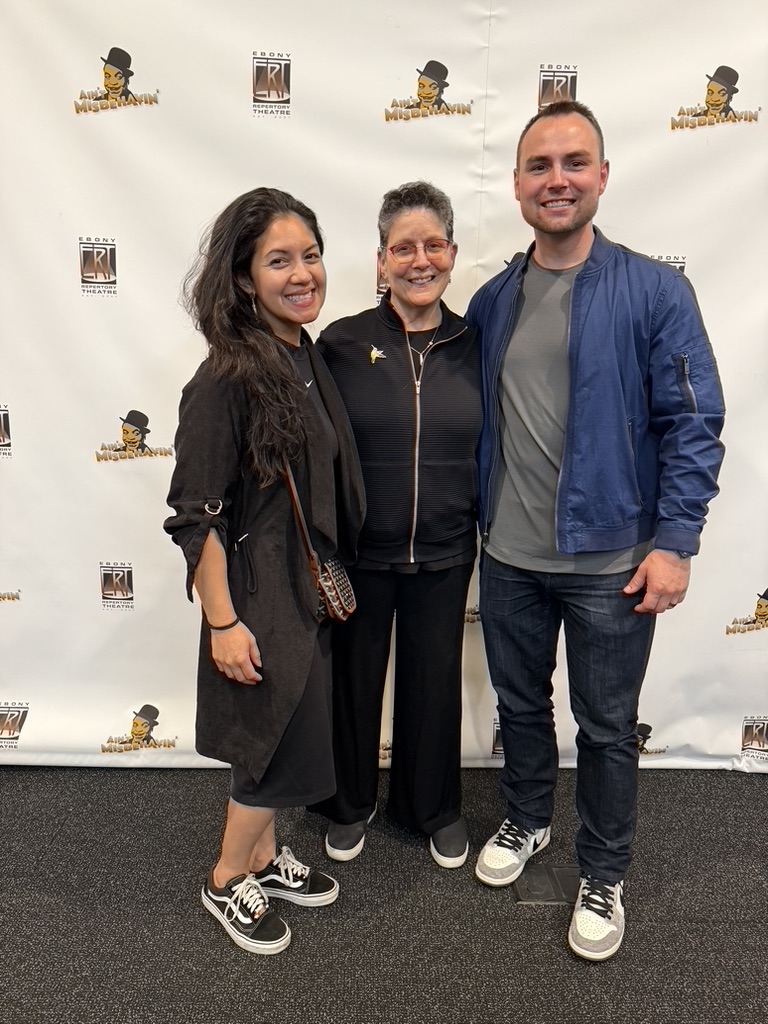
On another front, the show I’ve been privileged to stage manage over the past several weeks is closing on Monday. It has been such a source of honor to have friends come to see it. My group from the food bank came two weeks ago on Saturday, and my Thrivent financial advisor and his wife who came on their date night last Friday. It has been a joy and I’m so sorry the show will be over soon. The happiest part has been my reunion collaboration with Wren T. Brown and the Ebony Repertory family. Talk about coming home! This company is doing some of the best work in the city. I look forward to their receiving the recognition they deserve. On a personal note, Wren is one of the people in my life with the most integrity and has mastered the art of civility and judicious candor. He is a deliberate and thoughtful producer who weighs every decision with great care and intention. I’ve loved being on his team. Happy Birthday this week, Wren!
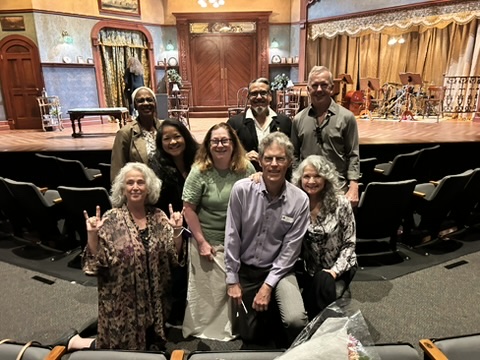
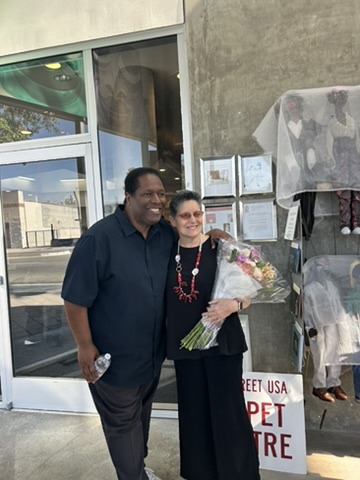
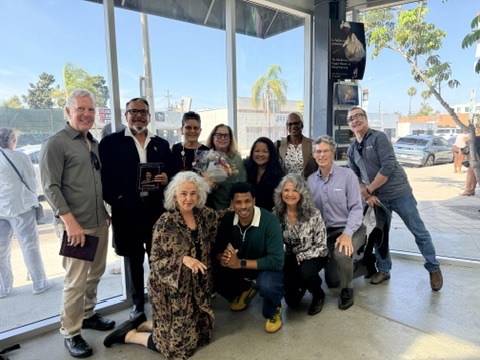
Finally, I wanted to take a moment to celebrate a long-time former colleague of mine, who recently retired and whom we celebrated collectively, his former and current colleagues, some current students, and many many alumni. Duncan Mahoney worked at USC for twenty-eight years. Here are my remarks from his party in the shop last week.
Tribute to Duncan Mahoney on his retirement – June 1, 2026
Duncan was always quick to say no but executed yes in the end.
His universal understanding of resources owned by the school and university has solved more than one impossible challenge over the last 28 years he has served the school.
I want to share some of the “invisible” things Duncan has done to keep the school running safely. Things which not happening will undoubtedly become more visible as time goes by.
He maintained the classrooms and lab spaces (our theatres). If a chair was broken, he’d have it brought back to the shop and repaired, or a substitute that he had purchased for just that moment would be brought back to the classroom. He was the one who finally convinced the university to replace the windows in the PED Building. And you can thank Duncan for the big-ass fans in the PED Classrooms.
The military precision which the classroom turnover in the summer and over winter recess was extraordinary to witness. Duncan knew the exact number of chairs and mats and cube set pieces and their corralling twice a year was a work of art which he and his staff executed. Let’s not even go into the mat-cleaning. That was a whole summer thang….He was the architect of what was in our first aid kits – a dizzying array of band aids and ace bandages and ice packs, eye wash solution. Anything you could need.
Who will be the person who says to the designer – this triangular platform is custom and will add $X to put you over budget. Would you consider using this stock alternative instead which is 2” longer and will save your budget $500? How many dozens of times has that money been saved? And with the simultaneous education of the designer and TD students?
During COVID -19, when we were getting ready to re-inhabit classroom spaces, Duncan followed the university’s guidelines as to how many people we could accommodate safely in each classroom and insisted that filters be replaced, and air systems cleaned maybe for the first time in their life spans. He was a little OCD about it.
At hundreds of strikes over the years, he taught thousands of young people how to get their kicks out of a Sawzall safely without losing a limb.
He thoughtfully and artistically created a garden embracing these two spaces with his own money and time and horticultural know-how. I remember multiple times where he brought the dragon fruit up to the office to have us sample his crop. Delicious!
He oversaw the decaying fleet of SDA vehicles and made decisions about when to get rid of the stake bed truck when it became a liability. He constantly assessed the changes in access to campus and to the Shrine storage to make sure our students were safe doing the work of the school. He milked every ounce of use out of every USC resource he was responsible for. He shopped for new tools and new resources he thought the students could best learn using and always saved his coins throughout the year to get them new “toys”.
Duncan has been one of the hardest working and passionate about excellence educators among us. Thank you for your partnership and generous collaboration on umpteen hundred shows over the last 25 years. Please join me in wishing Duncan continued learning and excellence in the next adventure he will be on. We love you, Duncan!
 lifeinthethe8tre
I love these glimpses into an unfamiliar world, Els.
Speaking of which, I finally included a little review of your book in our substack.
It’s me, Will Doolittle. I seem to always have this problem when I try to comment on one of your posts.
Thanks so much, Will! And I see both your comments!
Els
Dear Els,Well, you certainly gave me a lift to know th
don’t leave me hanging here! Talk later!