Last week I had the privilege of going to three productions that couldn’t have been more different. Wednesday evening found me in East Pasadena at A Noise Within, where there was a happy confluence of friends, colleagues, former students, and rareness of opportunity in viewing Thornton Wilder’s The Skin of Our Teeth. I’m a curious and if you would help me by filling this brief survey out, it would be great. Els’ Survey of The Skin Of Our Teeth. (I’ll share the results in a future post). Friday evening I attended the Visions and Voices production of EMK’s Frida: The Last Night Show, and Saturday evening, I saw the final preview of Cyrano de Bergerac at the Pasadena Playhouse. Talk about an smorgasbord of Theatrical outings! How lucky are we to live in a city with such diverse offerings in one week?
If you did the survey above, you’ll intuit despite my long affiliation with the theatre, I’d never worked on or even seen a production of The Skin Of Our Teeth. I’d read it when I served on the Literary Committee, but am a self-acknowledged poor play reader. Not bad plays, but bad reader of plays. I’d always been up front with my students in the class where I taught them how to read plays that this was not my forte, encouraging them to forge ahead and try to visualize the plays in their minds as they read. My former colleague Leia was the instigator of our outing to East Pasadena, because there were several cast members we knew in the cast, most notably one of our Production Office workers, Landon Robinson, and several of his classmates and alumni of SDA. I’m so happy that we put together an evening around this play, as it gave me an opportunity to see some dear friends and to witness this rarely produced play that is profoundly timely. The ANW production was richly produced, with the agile set by Frederica Nascimento that evolved as fluidly as the situations did throughout the play. Clean lines and a powerful use of color helped to ground the audience in the timeless world of Wilder’s allegorical play, which includes an ice age in New Jersey, a hurricane in Atlantic City, and a post-war return to the family’s home. Wilder’s play, written in 1942 and directed here by Julia Rodriguez-Elliott and Geoff Elliott was playful throughout the first act, breaking theatrical conventions with abandon – oops, there goes the fourth wall, wow – here comes a dinosaur and wooly mammoth into the house, and isn’t that a glacier bearing down on the house? By intermission, I turned to my friend and said, “I see why this play isn’t done very often.” We debated how this play written during World War II challenged expectations of how and who we were in the world, while satirizing the family and societal structure. The second and third acts provided to be equally riveting and relevant, especially in Act III where father Antrobus was pitted against his son, Henry, after they’d returned home after a seven-year war. Listening to them discussing divisions was heart-healing in this political climate. I will now need to return to read the play again, because my description here fails under the complexities of the script. I was pleased to see this production and encourage all you theatre nerds to get over to Pasadena before the end of September to witness this theatre classic.
I won’t say a lot about the Friday production because it was a one time event, other than to comment that it was an unexpected pairing of artists with material. The company of four young actors from Seoul, Korea, remounted a fantasy exploration of the creativity of Frida Kahlo, using the musical form to bring Kahlo’s inspiring and courageous story to life for the audience. It was at times culturally confusing and extremely loud, but the very full house was clearly appreciating this opportunity. There were subtitles in English for those of us who don’t speak Korean. As one of the academic panelists after the play, David Romans said, we were privileged to see what in effect was a US Premiere performance of this play which the writer and producer hope will have a future life. I particularly appreciated the moderator of the panel, Luis Alfaro’s gracious acceptance of the cultural incongruities of the evening and his largesse in “sharing Frida.” Kudos to the SDA Production Staff under the leadership of Tony Shayne for their support of this Visions and Voices offering. I was so happy to run into several former colleagues and reconnect with them that evening.
On Saturday evening, I attended the Pasadena Playhouse production of Cyrano de Bergerac. The scenic design by Afsoon Pajoufar was sparse but effective and fresh, with a brat green stage deck and large gestural scenic elements such as the stage-wide neon sign for the Cafe where Roxanne and Cyrano met in scenes bookending the main action of the play. The lighting design team of Josh Epstein and Edward Hansen were given a lot of challenges by the free adaptation of the script by Martin Krimp and the direction of Mike Donahue, which re-envisioned Act I where Cyrano attends a play at the Hotel de Bourgogne, populated with actors all over the house and balcony prior to the start of the main plot. By utilizing the beautiful and historic scars on the back wall of the stage, and emphasizing the proscenium arch, Nascimento easily transports us to the scene where Christian sees Roxane and Cyrano agrees to act as go between. Carolyn Mazuca’s costumes effectively bridged the prologue to the play and by doing so, the audience’s period to the original play of 1897. There were several whimsical punctuations of color and modernity in the costumes which made the language feel fresh and contemporary, as in the soldiers’ barracks as they chanted.
The acting was so extraordinary in this production, from the magnificent Cyrano, Chukwudi Iwuji to the spunky Roxane, Rosa Salazar, who managed to remain charming and intelligent in spite of her cluelessness as to Cyrano’s motives to assist. Will Hochman, as Christian, was equally adept and the trio of these three actors was a treat to watch. The rest of the company were made up of fine performers; I always love to see Larry Powell on stage, this time as Ligniére, and Kimberly Scott, as Madame Ragueneau grounding the ensemble. Director Donahue did a superb job keeping the focus on the language, the verse of which is easy for the audience to follow, with moments of delight such as when Cyrano skewers Valvere Roxane’s intended in the first Act with swashbuckling rhetorical wordplay. There was also plenty of real swashbuckling, choreographed by Rachel Lee Flesher. It was such a strong production and as a result, a fun and invigorating evening.
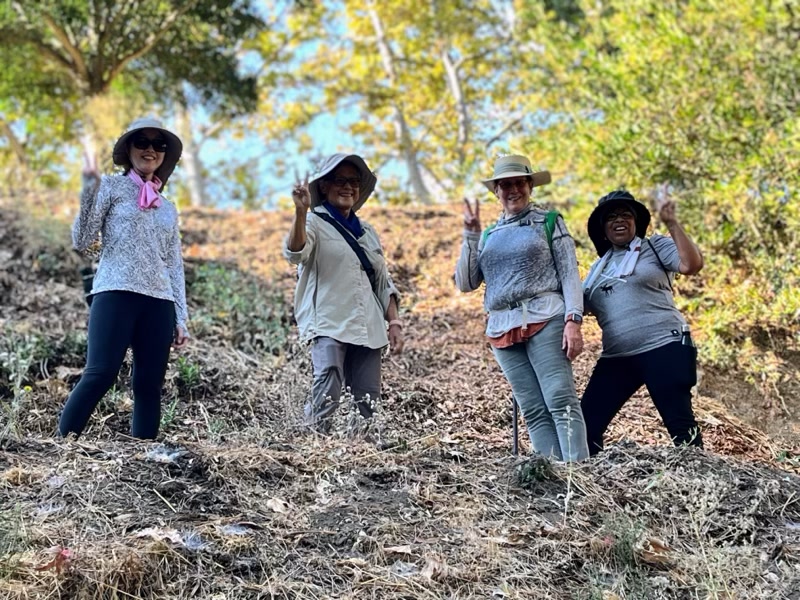
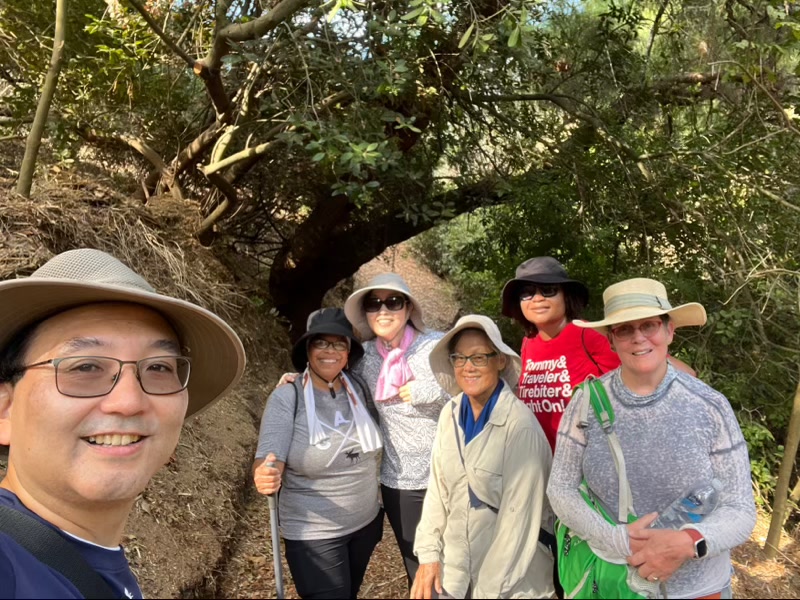
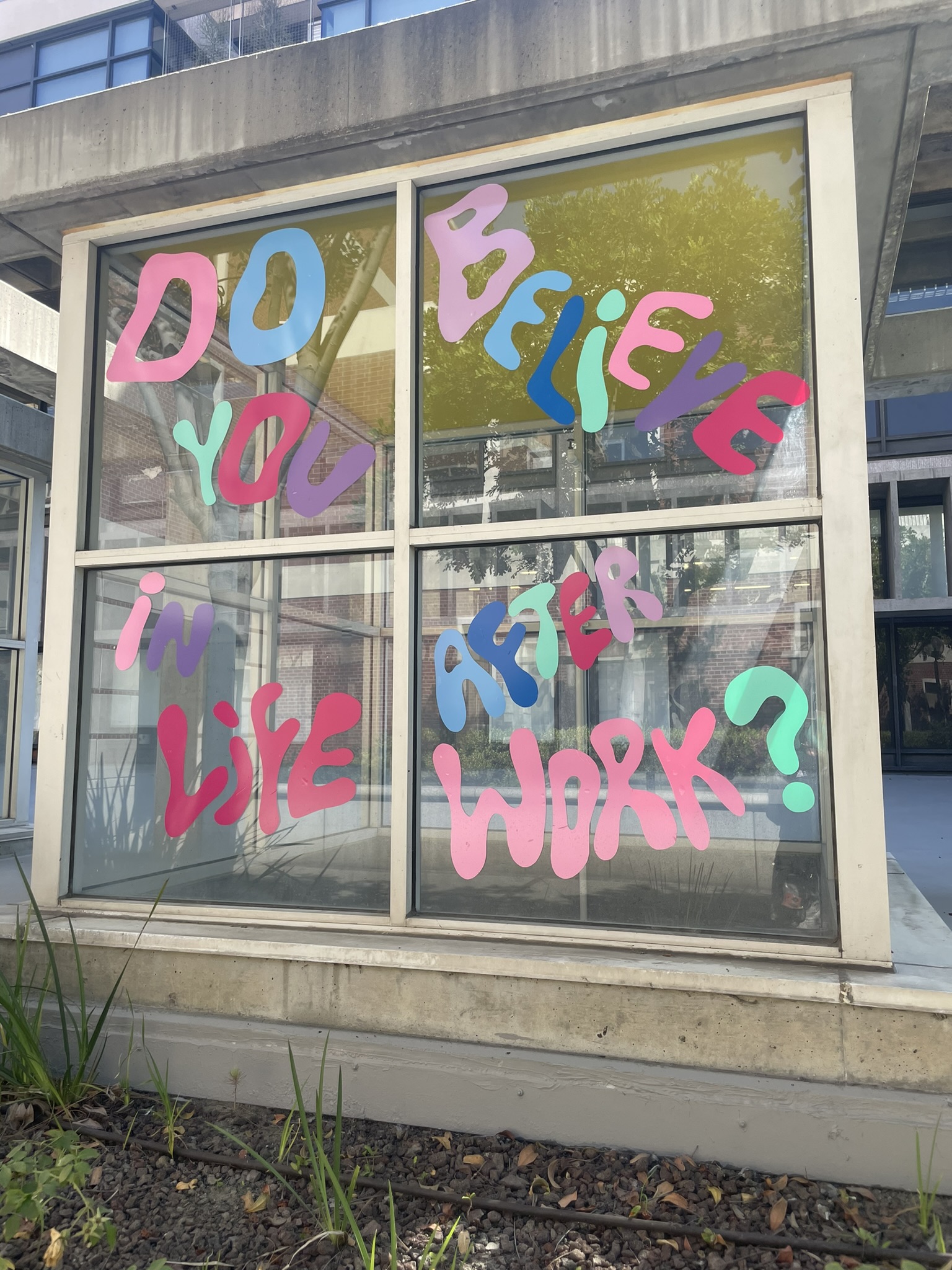
Saturday during the day, I took a wonderful and sweaty hike with my USC pals, hiking the Miraleste trail in Rancho Palos Verdes, followed by a yummy breakfast at The Think Cafe in San Pedro. Here are a few shots from our day thanks to John Tamura, and a question which seemed pertinent as I walked on the campus the other day. Do you believe in life after work? Most definitively, I do!
 lifeinthethe8tre